Showing posts with label Baha'i temple. Show all posts

Tuesday, February 19, 2013

Ayyám Al Há - أيام الهاء

The Baha'i calendar consists of 19 months and the Baha’i month consists of 19 days, giving 361 days, requiring the addition of four or five more days. Ayyám Al Há form the intercalary days that fill out the 365 or 366 days of the solar year.

Baha'u'llah specified in the Kitáb Al Aqdas that the Days of Ha should be inserted in the calendar just before the month of fasting:
"Let the days in excess of the months be placed before the month of fasting. We have ordained that these, amid all nights and days, shall be the manifestations of the letter Há, and thus they have not been bounded by the limits of the year and its months...and when they end--these days of giving that precede the season of restraint--let them enter upon the Fast. Thus hath it been ordained by Him Who is the Lord of all mankind."

This holiday begins each year on the evening of February 25 and ends at sunset on March 1st. Of this period Bahá'u'lláh writes:
"It behoveth the people of Bahá, throughout these days, to provide good cheer for themselves, their kindred and, beyond them, the poor and needy, and with joy and exultation to hail and glorify their Lord, to sing His praise and magnify His Name."

As in His prayer for Ayyám Al Há, Bahá'u'lláh juxtaposes these "days of giving" with the Fast's "season of restraint." Ayyám Al Há is intended partly as spiritual preparation for the Fast, a reminder of its approach, and a way of fostering the detachment from material things so necessary for the Fast.

“Ayyam Al Ha" is an Arabic phrase means literally the "Days of Ha" ("Ha" is an Arabic letter corresponding to the English "H") the numerical value of "Há" is 5, the sum of the numerical values of the letters in the "Báb," and the maximum number of intercalary days."Há" is also the first letter of an Arabic pronoun commonly used in Arabic religious writings to refer to God, or "the Divine Essence." "Há" by itself is used as a symbol of "the Essence of God," and was the subject of many Arabic essay on its mysteries.

Bahá'u'lláh has designated the intercalary days "amid all the nights and days" as manifestations of the letter Há"--that is, as Days of the Divine Essence. Thus Ayyám Al Há can be thought of as days that symbolize eternity, infinity, and the mystery and unknowable Essence of God Himself. Contemplation during these days of the timeless mystery of the Essence of God provides us the "joy and exultation" with which to "sing His praise and magnify His Name."

 
أيام الهاء

يتبع التقويم البهائي السنة الشمسية التي تتألف من 365 يوما وخمس ساعات وخمسين دقيقة. وتتألف السنة البهائية من تسعة عشر شهرا، كل شهر منها تسعة عشر يوما سُميت على أسماء صفات الله (فيكون المجموع 361 يومًا) يضاف إلى ذلك الأيام الزائدة وهي أربعة أيام، أو خمسة أيام في السنوات الكبيسة. هذه الايام الزائدة سميت بأيام الهاء وقد حدد حضرة بهاء الله موقعها في السنة البهائية بان تكون قبل شهر الصوم العلا
:15يتفضل حضرة بهاء الله في الكتاب الاقدس، فقرة
واجعلوا الايام الزّائدة عن الشّهور قبل شهر الصّيام، انّا جعلناها مظاهر الهاء بين اللّيالي والايام لذا ما تحددّت بحدود السّنة والشّهور، ينبغي لاهل البهاء ان يطعموا فيها انفسهم وذوي القربى ثم الفقراء والمساكين، ويهللنّ ويكبّرنّ ويسبّحنّ ويمجّدنّ ربّهم بالفرح والانبساط. واذا تمّت ايام الاعطاء قبل الامساك، فليدخلنّ في الصّيام كذلك حكم مولى الانام

تبدأ أيام الهاء كل عام مساء يوم الخامس والعشرين من شهر فبراير وتنتهي عند غروب شمس اليوم الأول من شهر مارس. وقد أوصى حضرة بهاء الله بإقامة الولائم، والضيافة، والإنفاق على الفقراء والمساكين، احتفالا بها

وتعقد فيها اجتماعات بكلّ محبّة وسرور وابتهاج وتتزيّن فيها مجالس عامّة ويكون الجميع فيها زمرة واحدة، فتتجسّد في الأبصار وحدة الأمّة وألفتها واتّحادها
حضرة عبد البهاء

المدلولات الروحانية لايام الهاء
هذه الأيام الزائدة على الشهور قد امتازت بانتسابها إلى "الهاء" وهو حرف يساوي في الحساب الأبجدي العدد خمسة، وهو أكبر عدد يمكن أن تصل إليه عدة أيام الهاء. وكذلك يشير حرف الهاء إلى مدلولات ومعان روحانية، ومن جملة ما يرمز إليه "الهوية الإلهية"، أي" ذات الغيب المنيع"، أي" الله" سبحانه وتعالى.وهي تعتبر اعداداً روحانياً لفترة الصوم

هذه ايام الهاء وأمرنا الكل أن ينفقوا فيها على انفسهم وعلى الذين توجهوا إلى هذا المقام المرفوع أن اذكروا الله فيها ثم اعرفوا قدرها لأنها تحكي عن هذا الاسم الذي به سخر الله الغيب والشهود
حضرة بهاء الله

قد تشرفت الأيام يا إلهي بالأيام التي سميتها بالهاء كأن كل يوم منها جعلته مبشراً ورسولاً ليبشر الناس بالأيام التي فيها فرضت الصيام على خلقك وبريتك ليستعد كل نفس للقائها ويعين في قلبه محلاً لها ويطهره باسمك لنزولها عليه
حضرة بهاء الله

Sunday, August 3, 2008

Baha'i House of Worship in Uganda


This unique and beautiful building, situated on the crest of Kikaya Hill, four miles from the center of Kampala on Gayaza Road, was started in May 1957 and opened to the public on January 15, 1961.

The building is 124 feet high, and its dome is 44 feet in diameter. It has a seating capacity for 800 people. From its circular verandah entry to the House of Worship can be made from any of its nine doors.

The green dome is made of tiny glazed mosaic tiles from Italy, while the lower roof tiles are from Belgium. The other walls are of precast stone quarried in Uganda. From Britain came the reinforcing steel and window frames and fittings. Germany supplied the colored glass. All the timber used for the doors and benches is from Uganda forests. The exquisite carpeting is of Persian make.

The Baha’i House of Worship is the central edifice of what will eventually be a group of buildings dedicated to the social, humanitarian, educational, scientific, as well as the spiritual aspects of Bahá’í community life. People of all faiths are welcome to use this Temple for prayer and meditation at any time.

Regular services are conducted which consists solely of reading singing and chanting of the Word of God from the Holy Scripture of the world’s great religions.

Sunday, June 22, 2008

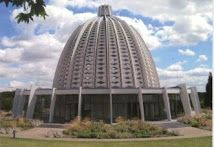
The Baha'i House of Worship in Germany


The House of Worship in Hofheim-Langenhain in Germany is the first of its kind in Europe, was inaugurated on July 4th, 1964. In her dedication address, Ruhiyyih Khanum, widow of Shoghi Effendi, said: This building is dedicated to the three fundamental truths of the Baha’I Religion: the oneness of God, the oneness of His Messengers and the oneness of mankind. Its doors are open to individuals of all religious persuasions, to all races, all ethnic groups, and all social classes. Within its walls will be heard not only prayers and scripture of our own religion, but also those of other great revealed religions of the world. We believe that these Holy Writings represent the treasure houses of the eternal basic truths, which God has revealed at different times for the guidance, and salvation of the entire human race.

The Faith of Baha’u’llah has no clergy. Baha’is believe it is the responsibility of each individual to conduct his or her own personal search for truth based on the immediate, unadulterated and unobscured Word of God. Consequently, in the House of Worship reading and chanting of Holy Scriptures from the world’s revealed religions is free of interpretation or elaboration through additional text or commentary.

Shoghi Effendi gave instructions in 1953 to build the first European House of Worship near Frankfurt am Main. A decisive factor in the choice of the location was this city’s central location with respect to both Germany and Europe as a whole.

A competition to design the House of Worship had already taken place in 1954. Following careful scrutiny of all proposals submitted by the nineteen participating architects, the design by a young Frankfurt based architect named Teuto Rocholl was selected.

The basic requirements for the structure of a House of Worship had been formulated by ‘Abdu’l Baha…….The Mashriqu’l Adhkar, which is to be erected over a central floor plan, …must have nine sides, doors, fountains, paths, gateways, columns and gardens, with the ground floor, galleries and domes, and in design and construction it must be beautiful…

The House of Worship was built using a steel concrete skeletal (exposed concrete) construction. The reconstructed steel concrete ribs were assembled on site and fixed in place with poured steel concrete rings brought into place at the lower and upper extremities of the ribs.

After three and a half years of construction, Europe’s first Baha’I House of Worship was dedicated in July 1964.

In 1987, the House of worship was declared a cultural monument by the State of Hesse (i.e. the State incorporating the City of Frankfurt and its environs).

In November 2006, I visited the Baha’i House of Worship in Germany and I enjoyed the spiritual atmosphere and I read a prayer for unity.

Thursday, June 19, 2008

Chicago Tribune


A small -town oasis


Wilmette preserves and enhances historic ambience while looking to the future


"Adding to the village's international charm is the filigree-domed Baha'i House of Worship, one of only seven Baha'i temples world- wide. Encircled by blossoms and fountains, it attracts international visitors year round. "

Sunday, March 2, 2008

Prayer for Mashriq Al Adhkar

Prayer for Mashriq Al Adhkar


"O God, my aim, my hope! With hearts full of longing and breasts full of yearning, we beg of Thee and we supplicate at the threshold of Thy might to raise the Mashriqu'l Adhkar in Chicago, in the most speedy manner. Make its basis firm and its structure enduring, suffer its pillars to remain unshakable and make its columns of the steel and iron of firmness. Glorify its servants, beautify the characters and make the worshippers beloved. Suffer its nightingales to sing Ya-Baha'ul-Abha and warable the praises of our Lord, the Most Supreme. Make its men the standards unforded on the mountains of the world, and its women the sanctified angels of the tabernacle of the world! "

Abdu'l Baha

Tuesday, July 31, 2007

مشرق الأذكار البهائي - The Baha'i House of Worship in the USA

مشرق الأذكار البهائي

بولميت إلينويز

ان مشرق الأذكار بولميت هو أحد سبعة مشارق أذكار موجودة في أنحاء العالم الآن .وهي ترمز إلى الأتحاد والدعاء إلى الله
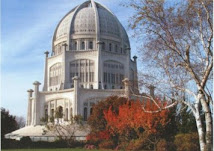
ينفرد كل مشرق أذكار بطابعه المعماري الخاص إلا انهم جميعا يشتركون بوجود حدائق تلتف حول المبنى المكون من تسعة جوانب تحمل قبة هائلة كرمز للتعبير عن وحدة البشر وووحدة الأديان تحت مظلة الخالق
تم افتتاح مشرق الأذكار عام 1953م بعد أن استغرق بنائه أكثر من ثلاثين عاماً
تواريخ هامة
وضع حجر الأساس 1912م
بداية عملية البناء 1921
افتتاح مشرق الأذكار 1953
السعة داخل قاعة الدعاء 1.192 مقعد
الأبعاد :الارتفاع 138قدم (42 متر
قطر القبة 90 قدم (27.5 متر

ترحب مشارق الاذكار بالجميع، فهى مفتوحة للبهائيين ولغير البهائيين، جميع الاجناس والاعراق والديانات والعقائد مرحب بهم للدخول الى مشرق الاذكار والدعاء الى الله الواحد الاحد. كما تتلى فيها الآيات من الكتب المقدسة البهائية والكتب المقدسة لدى الديانات الاخرى ايضا كالمسيحية واليهودية والإسلام وغيرها.

وبذلك تكون مشارق الاذكار تعبيرا واضحا عن مبادئ الديانة البهائية، وهى
وحدانية الله، وحدة اصل الاديان ، وحدة الجنس البشري، والوحدة مع التنوع والتعدد

وبالاضافة الى مبنى مشرق الاذكار ، تلحق به ايضا ابنية او مؤسسات فرعية توفر الخدمات الاجتماعية والتعليمية والعلمية وهى :
مدرسة للايتام
مستشفى
صيدلية
دار للمسنين
جامعة للعلوم والاداب
دار ضيافة
مراكز ابحاث
وغيرها


The Bahá'í House of Worship

Wilmette, Illinois


One of only seven Bahá'í temples in the world at present, this unique structure stands for unity and invites prayer to God. While each temple has its own distinctive design, they all conform to a consistent theme: an area of gardens encircles a nine-sided structure covered by a single, majestic dome (symbolizing the unity of all people and religions under God). The House of Worship in Wilmette was dedicated in 1953 after more than 30 years of construction. French-Canadian architect Louis Bourgeois labored for 8 years to arrive at an appropriate design for such a lofty purpose.


A Single, Sacred Space

The building and gardens form a single, sacred space where all people are invited to pray to God and meditate in an atmosphere of beauty and light. The Bahá'í Faith recognizes the value of beauty. The Word of God revealed in every age is both beautiful and practical – creating a vision for the renewal of civilization.
Significant Dates
Cornerstone laid 1912
Building construction began 1921
Building completed, dedication 1953
Capacity
Seating in the auditorium 1,192

Dimensions
Height of auditorium interior 42 metersDiameter of dome 27.5 meters