Showing posts with label Arabic. Show all posts
Showing posts with label Arabic. Show all posts
Friday, September 19, 2014


Friday, December 3, 2010
Baha’u’llah’s Writing
 60% of Baha’u’llah’s writing is in Arabic and 40% of his writing is in Persian.
 “Although there can be no question or doubt as to the sweetness of the Persian tongue, yet it hath not the scope of the Arabic. There are many things which have not been expressed in Persian, that is to say, words referring to such things have not been devised, whilst in Arabic there are several words describing the same thing. Indeed there existeth no language in the world as vast and comprehensive as Arabic”
From a Tablet to Abu’l-Fadl -The Tabernacle of Unity – Baha’u’llah
Friday, March 5, 2010
مشرق الأذكار البهائي بالولايات المتحدة الامريكية

طوبى لمن توجه الى مشارق الأذكار في الأسـحار ذاكراً مستغفراً واذا دخل يقعد صامتاً لاصغاء آيات الله الملك العزيز الحميد - قل مشرق الأذكار انه كل بيت بُني لذكري في المدن والقرى كذلك سُمي لدى العرش ان انتم من العارفين
أســـتغرق لويس برجواه المصـــمم المعماري- الفرنسي/الكندي الجنسية - ثمان ســنوات من العمل الشــــاق ليصـــل إلى تصـــميم لائق لهذا الغرض السامي. فقد تخيل المبنى عبارة عن زخرفة دقيقة مشعة بالضــياء ، ضـــياء الوحي الإلهي الذي تجــلى بظـهور حضــرة بهاء الله
أســـتغرق لويس برجواه المصـــمم المعماري- الفرنسي/الكندي الجنسية - ثمان ســنوات من العمل الشــــاق ليصـــل إلى تصـــميم لائق لهذا الغرض السامي. فقد تخيل المبنى عبارة عن زخرفة دقيقة مشعة بالضــياء ، ضـــياء الوحي الإلهي الذي تجــلى بظـهور حضــرة بهاء الله
يعتبر المبنى طراز معمـاري فريد فهو لا ينتمي لأي من الطرز الغربية أو الشرقية، وهو يدعو جميع افراد البشر من مختلف الاديان والجنسيات لعبادة الحق جل جلاله
 لعبادة الحق جل جلاله
 :يقول لويس برجواه
تحتوى الأبراج على زخـارف متشابكة لرموز جـميع الأديان ، دلــيلاً ومثالاً للزائر من أي ديانـة علـى الأخوة العـالمية التي يرمز إليها مشرق الأذكار
ولتحويل رسومات بورجواه إلى هذا البناء المزخرف، تم ابتكـار عملية خاصة لصـب الأســمنت الأبيض المخـلوط بحــبيبات الكوارتز في قوالب معينة لتشــكيل تلك الزخـارف المشـــابه للدانتيلا. وبعد ذلك تم تثبيتها في أماكنها المخصصة لتكوين الطبقة الخارجية للمبنى

الرمز المنقوش في أعلى القبة الداخلية عــبارة عن تشــكيل من الحروف العربية تكون جملة
" يا بهــاء الأبهــى "
الآيات المنقوشة أعلى المدخل والقاعة الداخلية
سوف يلاحظ زائروا مشرق الأذكار وجود 18 آية من الآيات المنزلة من قلم حضرة بهـاء الله منقوشة أعلى المداخل التسـعة و أيضاً أعلى زوايا القاعة الداخلية
سوف يلاحظ زائروا مشرق الأذكار وجود 18 آية من الآيات المنزلة من قلم حضرة بهـاء الله منقوشة أعلى المداخل التسـعة و أيضاً أعلى زوايا القاعة الداخلية
:الآيات المنقوشة أعلى المداخل
"ما الأرض إلا وطنٌ واحد والبشـر سـكانه"
" أحب الأشياء عندي الإنصافُ. لاترغب عنه إن تكن إلىّ راغــباً "
"حبي حصــني من دخل فيه نجـا وأمنَ "
" لا تنفـس بخطأ أحد ما دمت خاطـئاً "
" فؤادك منزلي قدســهُ لنزولي "
" جعلتُ لك الموت بشـارة كيف تحـزن منهُ "
"اذكرني في أرضـي لأذكرك في سـمائي "
" يا أغنياء الأرض الفقراء أمانتي بينكم، إذاً فأحفظوا أمانتي كما ينبغــي "
" أصـل كل العلوم هو عرفانُ اللهِ جل جـلالهُ "
" أحب الأشياء عندي الإنصافُ. لاترغب عنه إن تكن إلىّ راغــباً "
"حبي حصــني من دخل فيه نجـا وأمنَ "
" لا تنفـس بخطأ أحد ما دمت خاطـئاً "
" فؤادك منزلي قدســهُ لنزولي "
" جعلتُ لك الموت بشـارة كيف تحـزن منهُ "
"اذكرني في أرضـي لأذكرك في سـمائي "
" يا أغنياء الأرض الفقراء أمانتي بينكم، إذاً فأحفظوا أمانتي كما ينبغــي "
" أصـل كل العلوم هو عرفانُ اللهِ جل جـلالهُ "
:بعض الآيات المنقوشة أعلى زوايا القاعة الداخلية
" كلكم أثمار شجرة واحدة وأوراق غصـنٍ واحد "
" نور الاتحـاد ينير الآفـاق "
" عاشـروا مع الأديان بالروح والريحـان "
" ياابن الوجود مشـكاتي أنتَ ومصـباحي فيكَ "
" ياابن الوجـود اعمل حـدودي حـباً لي "
" نور الاتحـاد ينير الآفـاق "
" عاشـروا مع الأديان بالروح والريحـان "
" ياابن الوجود مشـكاتي أنتَ ومصـباحي فيكَ "
" ياابن الوجـود اعمل حـدودي حـباً لي "
:الأنشـطة البهائية
جميع الأحتفالات والأنشطة البهائية مفتوحة للجميع من مختلف الجنسـيات، والعقائد والأديان لحضورها
ضمن الأنشطة
ضمن الأنشطة
The House of Worship Stands for Light and Unity

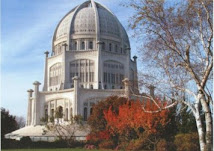
 Louis Bourgeois, architect of the temple, conceived of the ornamental tracery as embodying and celebrating light—the light of a new revelation from God revealed through Bahá'u'lláh. Neither of the East nor of the West, the Temple design transcends any specific culture, forming a unique structure where the world’s inhabitants can come and be united in prayer.
THE SYMBOL at the top of the dome is an arrangement of the Arabic words : Yá Bahá’u’l-Abhá—a prayer or invocation meaning O Thou Glory of the All-Glorious.
“In the tracery of the towers are intertwined all the religious symbols of the past, demonstrating to each beholder of any religion: welcome to this Temple exemplifying universal brotherhood.”
—Louis Bourgeois
Entrance and Alcove Inscriptions
Visitors to the House of Worship will find 18 quotations from the writings of Bahá'u'lláh integrated into the entrances and alcoves.
Above the Entrances:
"The earth is but one country, and mankind its citizens."
"The best beloved of all things in My sight is Justice;turn not away therefrom if thou desirest Me."
"My love is My stronghold; he that entereth theein is safe and secure."
"Breathe not the sins of others so long as thou art thyself a sinner."
"Thy heart is My home; sanctify it for My descent."
"I have made death a messenger of joy to thee. Wherefore dost thou grieve?"
"Make mention of Me on My earth, that in My heaven I may remember thee."
"O rich ones on earth! The poor in your midst are My trust; guard ye My trust."
"The source of all learning is the knowledge of God, exalted be His Glory."
In the Alcoves:
"All the Prophets of God proclaim the same Faith."
"Religion is a radiant light and an impregnable stronghold."
"Ye are the fruits of one tree,and the leaves of one branch."
"So powerful is unity’s light that it can illumine the whole earth."
"Consort with the followers of all religions with friendliness."
"O Son of Being! Thou art My lamp and My light is in thee."
"O Son of Being! Walk in My statutes for love of Me."
"Thy paradise is My love; thy heavenly home is reunion with Me."
"The light of a good character surpasseth the light of the sun."
Thursday, November 12, 2009
Celebrating the birth of Baha’u’llah

"I was but a man like others, asleep upon My couch, when lo, the breezes of the All-Glorious were wafted over Me, and taught Me the knowledge of all that hath been. This thing is not from Me, but from One Who is Almighty and All-Knowing. And He bade Me lift up My voice between earth and heaven, and for this there befell Me what hath caused the tears of every man of understanding to flow."
Baha'u'llah
Bahá'u'lláh, a title in Arabic that means "The Glory of God", was born on November 12, 1817 in Iran. The son of a wealthy government minister, Mirza Buzurg-i-Nuri, His given name was Husayn Ali and His family could trace its ancestry back to the great dynasties of Iran's imperial past. Bahá'u'lláh led a princely life as a young man, receiving an education that focused largely on horsemanship, swordsmanship, calligraphy and classic poetry.
In October 1835, Bahá'u'lláh married `Asiyih Khanum, the daughter of another nobleman. They had three children: a son, `Abdu'l-Bahá, born in 1844; a daughter, Bahiyyih, born in 1846; and a son, Mihdi, born in 1848. Bahá'u'lláh declined the ministerial career open to Him in government, and chose instead to devote His energies to a range of philanthropies which had, by the early 1840s, earned Him widespread renown as "Father of the Poor."
Baha'u'llah
Bahá'u'lláh, a title in Arabic that means "The Glory of God", was born on November 12, 1817 in Iran. The son of a wealthy government minister, Mirza Buzurg-i-Nuri, His given name was Husayn Ali and His family could trace its ancestry back to the great dynasties of Iran's imperial past. Bahá'u'lláh led a princely life as a young man, receiving an education that focused largely on horsemanship, swordsmanship, calligraphy and classic poetry.
In October 1835, Bahá'u'lláh married `Asiyih Khanum, the daughter of another nobleman. They had three children: a son, `Abdu'l-Bahá, born in 1844; a daughter, Bahiyyih, born in 1846; and a son, Mihdi, born in 1848. Bahá'u'lláh declined the ministerial career open to Him in government, and chose instead to devote His energies to a range of philanthropies which had, by the early 1840s, earned Him widespread renown as "Father of the Poor."

Because of His teachings, He was banished into an exile, eventually lasting forty years, that took Him to the Holy Land. The first was to Baghdad where, in 1863, He announced Himself as the One promised by His Forerunner, the Báb. From Baghdad, Bahá'u'lláh was sent to Constantinople, to Adrianople, and finally to Acre, in the Holy Land, where He arrived as a prisoner.
Beginning in September 1867, Bahá'u'lláh wrote a series of letters to the world leaders of His time, addressing, among others, Emperor Napoleon III, Queen Victoria, Kaiser Wilhelm I, Tsar Alexander II of Russia, Emperor Franz Joseph, Pope Pius IX, Sultan Abdul-Aziz, and the Persian ruler, Nasiri'd-Din Shah.
In these letters, Bahá'u'lláh openly proclaimed His station. He spoke of the dawn of a new age. But first, He warned, there would be catastrophic upheavals in the world's political and social order. To smooth humanity's transition, He urged the world's leaders to pursue justice. He called for general efforts at disarmament and urged the world's rulers to band together into some form of commonwealth of nations. Only by acting collectively against war, He said, could a lasting peace be established.
Continued agitation from opponents caused the Turkish Government to send the exiles to Acre, a penal city in Ottoman Palestine. Acre was the end of the world, the final destination for the worst of murderers, highway robbers and political dissidents. A walled city of filthy streets and damp, desolate houses, Acre had no source of fresh water, and the air was popularly described as being so foul that over flying birds would fall dead out of the sky.
It was in Acre that Bahá'u'lláh's most important work was written. Known more commonly among Bahá'ís by its Arabic name, the Kitab-Al-Aqdas(the Most Holy Book), it outlines the essential laws and principles that are to be observed by His followers, and lays the groundwork for Bahá'í administration.
In the late 1870s, Bahá'u'lláh was given the freedom to move outside the city's walls, and His followers were able to meet with Him in relative peace and freedom. He took up residence in an abandoned mansion and was able to further devote Himself to writing.
On 29 May 1892, Bahá'u'lláh passed away. His remains were laid to rest in a garden room adjoining the restored mansion, which is known as Bahji. For Bahá'ís, this spot is the most holy place on earth.
His teachings had already begun to spread beyond the confines of the Middle East, and His Shrine is today the focal point of the world community which these teachings have brought into being.
Tuesday, July 31, 2007
مشرق الأذكار البهائي - The Baha'i House of Worship in the USA
مشرق الأذكار البهائي
بولميت إلينويز
 ان مشرق الأذكار بولميت هو أحد سبعة مشارق أذكار موجودة في أنحاء العالم الآن .وهي ترمز إلى الأتحاد والدعاء إلى الله
ينفرد كل مشرق أذكار بطابعه المعماري الخاص إلا انهم جميعا يشتركون بوجود حدائق تلتف حول المبنى المكون من تسعة جوانب تحمل قبة هائلة كرمز للتعبير عن وحدة البشر وووحدة الأديان تحت مظلة الخالق
تم افتتاح مشرق الأذكار عام 1953م بعد أن استغرق بنائه أكثر من ثلاثين عاماً
تواريخ هامة
وضع حجر الأساس 1912م
بداية عملية البناء 1921
افتتاح مشرق الأذكار 1953
السعة داخل قاعة الدعاء 1.192 مقعد
الأبعاد :الارتفاع 138قدم (42 متر
قطر القبة 90 قدم (27.5 متر
ترحب مشارق الاذكار بالجميع، فهى مفتوحة للبهائيين ولغير البهائيين، جميع الاجناس والاعراق والديانات والعقائد مرحب بهم للدخول الى مشرق الاذكار والدعاء الى الله الواحد الاحد. كما تتلى فيها الآيات من الكتب المقدسة البهائية والكتب المقدسة لدى الديانات الاخرى ايضا كالمسيحية واليهودية والإسلام وغيرها.
وبذلك تكون مشارق الاذكار تعبيرا واضحا عن مبادئ الديانة البهائية، وهى
وحدانية الله، وحدة اصل الاديان ، وحدة الجنس البشري، والوحدة مع التنوع والتعدد
وبالاضافة الى مبنى مشرق الاذكار ، تلحق به ايضا ابنية او مؤسسات فرعية توفر الخدمات الاجتماعية والتعليمية والعلمية وهى :
مدرسة للايتام
مستشفى
صيدلية
دار للمسنين
جامعة للعلوم والاداب
دار ضيافة
مراكز ابحاث
وغيرها
The Bahá'í House of Worship
Wilmette, Illinois

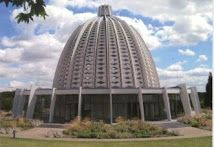
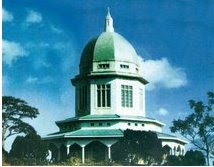
One of only seven Bahá'í temples in the world at present, this unique structure stands for unity and invites prayer to God. While each temple has its own distinctive design, they all conform to a consistent theme: an area of gardens encircles a nine-sided structure covered by a single, majestic dome (symbolizing the unity of all people and religions under God). The House of Worship in Wilmette was dedicated in 1953 after more than 30 years of construction. French-Canadian architect Louis Bourgeois labored for 8 years to arrive at an appropriate design for such a lofty purpose.
A Single, Sacred Space
The building and gardens form a single, sacred space where all people are invited to pray to God and meditate in an atmosphere of beauty and light. The Bahá'í Faith recognizes the value of beauty. The Word of God revealed in every age is both beautiful and practical – creating a vision for the renewal of civilization.
Significant Dates
Cornerstone laid 1912
Building construction began 1921
Building completed, dedication 1953
Cornerstone laid 1912
Building construction began 1921
Building completed, dedication 1953
Capacity
Seating in the auditorium 1,192
Dimensions
Height of auditorium interior 42 metersDiameter of dome 27.5 meters
Saturday, July 7, 2007
Sellection from Kitab-Alaqdas - Part two
“THIS IS A TRANSLATION FROM ITS ORIGINAL ARABIC LANGUAGE"
"IN THE NAME OF HIM WHO IS THE SUPREME RULER OVER ALL THAT HATH BEEN AND ALL THAT IS TO BE
The first duty prescribed by God for His servants is the recognition of Him Who is the Dayspring of His Revelation and the Fountain of His laws, Who representeth the Godhead in both the Kingdom of His Cause and the world of creation. Whoso achieveth this duty hath attained unto all good; and whoso is deprived thereof hath gone astray, though he be the author of every righteous deed. It behoveth every one who reacheth this most sublime station, this summit of transcendent glory, to observe every ordinance of Him Who is the Desire of the world. These twin duties are inseparable. Neither is acceptable without the other. Thus hath it been decreed by Him Who is the Source of Divine inspiration.
They whom God hath endued with insight will readily recognize that the precepts laid down by God constitute the highest means for the maintenance of order in the world and the security of its peoples. He that turneth away from them is accounted among the abject and foolish. We, verily, have commanded you to refuse the dictates of your evil passions and corrupt desires, and not to transgress the bounds which the Pen of the Most High hath fixed, for these are the breath of life unto all created things. The seas of Divine wisdom and Divine utterance have risen under the breath of the breeze of the All-Merciful. Hasten to drink your fill, O men of understanding! They that have violated the Covenant of God by breaking His commandments, and have turned back on their heels, these have erred grievously in the sight of God, the All-Possessing, the Most High.
ye peoples of the world! Know assuredly that My commandments are the lamps of My loving providence among My servants, and the keys of My mercy for My creatures. Thus hath it been sent down from the heaven of the Will of your Lord, the Lord of Revelation. Were any man to taste the sweetness of the words which the lips of the All-Merciful have willed to utter, he would, though the treasures of the earth be in his possession, renounce them one and all, that he might vindicate the truth of even one of His commandments, shining above the Dayspring of His bountiful care and loving-kindness.
Say: From My laws the sweet-smelling savour of My garment can be smelled, and by their aid the standards of Victory will be planted upon the highest peaks. The Tongue of My power hath, from the heaven of My omnipotent glory, addressed to My creation these words: “Observe My commandments, for the love of My beauty.” Happy is the lover that hath inhaled the divine fragrance of his Best-Beloved from these words, laden with the perfume of a grace which no tongue can describe. By My life! He who hath drunk the choice wine of fairness from the hands of My bountiful favour will circle around My commandments that shine above the Dayspring of My creation.
Think not that We have revealed unto you a mere code of laws. Nay, rather, We have unsealed the choice Wine with the fingers of might and power. To this beareth witness that which the Pen of Revelation hath revealed. Meditate upon this, O men of insight!"
Sunday, July 1, 2007

Subscribe to:
Posts (Atom)