Friday, December 3, 2010

Baha’u’llah’s Writing

60% of Baha’u’llah’s writing is in Arabic and 40% of his writing is in Persian.


“Although there can be no question or doubt as to the sweetness of the Persian tongue, yet it hath not the scope of the Arabic. There are many things which have not been expressed in Persian, that is to say, words referring to such things have not been devised, whilst in Arabic there are several words describing the same thing. Indeed there existeth no language in the world as vast and comprehensive as Arabic”


From a Tablet to Abu’l-Fadl -The Tabernacle of Unity – Baha’u’llah

Friday, March 5, 2010

مشرق الأذكار البهائي بالولايات المتحدة الامريكية

:يتفضل حضرة بهاء الله

طوبى لمن توجه الى مشارق الأذكار في الأسـحار ذاكراً مستغفراً واذا دخل يقعد صامتاً لاصغاء آيات الله الملك العزيز الحميد - قل مشرق الأذكار انه كل بيت بُني لذكري في المدن والقرى كذلك سُمي لدى العرش ان انتم من العارفين

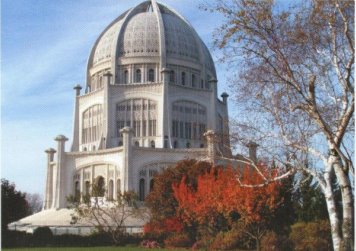
أســـتغرق لويس برجواه المصـــمم المعماري- الفرنسي/الكندي الجنسية - ثمان ســنوات من العمل الشــــاق ليصـــل إلى تصـــميم لائق لهذا الغرض السامي. فقد تخيل المبنى عبارة عن زخرفة دقيقة مشعة بالضــياء ، ضـــياء الوحي الإلهي الذي تجــلى بظـهور حضــرة بهاء الله

يعتبر المبنى طراز معمـاري فريد فهو لا ينتمي لأي من الطرز الغربية أو الشرقية، وهو يدعو جميع افراد البشر من مختلف الاديان والجنسيات لعبادة الحق جل جلاله


:يقول لويس برجواه
تحتوى الأبراج على زخـارف متشابكة لرموز جـميع الأديان ، دلــيلاً ومثالاً للزائر من أي ديانـة علـى الأخوة العـالمية التي يرمز إليها مشرق الأذكار

ولتحويل رسومات بورجواه إلى هذا البناء المزخرف، تم ابتكـار عملية خاصة لصـب الأســمنت الأبيض المخـلوط بحــبيبات الكوارتز في قوالب معينة لتشــكيل تلك الزخـارف المشـــابه للدانتيلا. وبعد ذلك تم تثبيتها في أماكنها المخصصة لتكوين الطبقة الخارجية للمبنى


الرمز المنقوش في أعلى القبة الداخلية عــبارة عن تشــكيل من الحروف العربية تكون جملة
" يا بهــاء الأبهــى "

الآيات المنقوشة أعلى المدخل والقاعة الداخلية
سوف يلاحظ زائروا مشرق الأذكار وجود 18 آية من الآيات المنزلة من قلم حضرة بهـاء الله منقوشة أعلى المداخل التسـعة و أيضاً أعلى زوايا القاعة الداخلية

:الآيات المنقوشة أعلى المداخل


"ما الأرض إلا وطنٌ واحد والبشـر سـكانه"
" أحب الأشياء عندي الإنصافُ. لاترغب عنه إن تكن إلىّ راغــباً "
"حبي حصــني من دخل فيه نجـا وأمنَ "
" لا تنفـس بخطأ أحد ما دمت خاطـئاً "
" فؤادك منزلي قدســهُ لنزولي "
" جعلتُ لك الموت بشـارة كيف تحـزن منهُ "
"اذكرني في أرضـي لأذكرك في سـمائي "
" يا أغنياء الأرض الفقراء أمانتي بينكم، إذاً فأحفظوا أمانتي كما ينبغــي "
" أصـل كل العلوم هو عرفانُ اللهِ جل جـلالهُ "


:بعض الآيات المنقوشة أعلى زوايا القاعة الداخلية
" كلكم أثمار شجرة واحدة وأوراق غصـنٍ واحد "
" نور الاتحـاد ينير الآفـاق "
" عاشـروا مع الأديان بالروح والريحـان "
" ياابن الوجود مشـكاتي أنتَ ومصـباحي فيكَ "
" ياابن الوجـود اعمل حـدودي حـباً لي "

:الأنشـطة البهائية
جميع الأحتفالات والأنشطة البهائية مفتوحة للجميع من مختلف الجنسـيات، والعقائد والأديان لحضورها
ضمن الأنشطة

The House of Worship Stands for Light and Unity


Louis Bourgeois, architect of the temple, conceived of the ornamental tracery as embodying and celebrating light—the light of a new revelation from God revealed through Bahá'u'lláh. Neither of the East nor of the West, the Temple design transcends any specific culture, forming a unique structure where the world’s inhabitants can come and be united in prayer.

THE SYMBOL at the top of the dome is an arrangement of the Arabic words : Yá Bahá’u’l-Abhá—a prayer or invocation meaning O Thou Glory of the All-Glorious.


“In the tracery of the towers are intertwined all the religious symbols of the past, demonstrating to each beholder of any religion: welcome to this Temple exemplifying universal brotherhood.”
—Louis Bourgeois

Entrance and Alcove Inscriptions

Visitors to the House of Worship will find 18 quotations from the writings of Bahá'u'lláh integrated into the entrances and alcoves.

Above the Entrances:

"The earth is but one country, and mankind its citizens."

"The best beloved of all things in My sight is Justice;turn not away therefrom if thou desirest Me."

"My love is My stronghold; he that entereth theein is safe and secure."

"Breathe not the sins of others so long as thou art thyself a sinner."

"Thy heart is My home; sanctify it for My descent."

"I have made death a messenger of joy to thee. Wherefore dost thou grieve?"

"Make mention of Me on My earth, that in My heaven I may remember thee."

"O rich ones on earth! The poor in your midst are My trust; guard ye My trust."

"The source of all learning is the knowledge of God, exalted be His Glory."


In the Alcoves:


"All the Prophets of God proclaim the same Faith."

"Religion is a radiant light and an impregnable stronghold."

"Ye are the fruits of one tree,and the leaves of one branch."

"So powerful is unity’s light that it can illumine the whole earth."

"Consort with the followers of all religions with friendliness."

"O Son of Being! Thou art My lamp and My light is in thee."

"O Son of Being! Walk in My statutes for love of Me."

"Thy paradise is My love; thy heavenly home is reunion with Me."

"The light of a good character surpasseth the light of the sun."

Thursday, November 12, 2009

Celebrating the birth of Baha’u’llah


"I was but a man like others, asleep upon My couch, when lo, the breezes of the All-Glorious were wafted over Me, and taught Me the knowledge of all that hath been. This thing is not from Me, but from One Who is Almighty and All-Knowing. And He bade Me lift up My voice between earth and heaven, and for this there befell Me what hath caused the tears of every man of understanding to flow."
Baha'u'llah

Bahá'u'lláh, a title in Arabic that means "The Glory of God", was born on November 12, 1817 in Iran. The son of a wealthy government minister, Mirza Buzurg-i-Nuri, His given name was Husayn Ali and His family could trace its ancestry back to the great dynasties of Iran's imperial past. Bahá'u'lláh led a princely life as a young man, receiving an education that focused largely on horsemanship, swordsmanship, calligraphy and classic poetry.

In October 1835, Bahá'u'lláh married `Asiyih Khanum, the daughter of another nobleman. They had three children: a son, `Abdu'l-Bahá, born in 1844; a daughter, Bahiyyih, born in 1846; and a son, Mihdi, born in 1848. Bahá'u'lláh declined the ministerial career open to Him in government, and chose instead to devote His energies to a range of philanthropies which had, by the early 1840s, earned Him widespread renown as "Father of the Poor."


Because of His teachings, He was banished into an exile, eventually lasting forty years, that took Him to the Holy Land. The first was to Baghdad where, in 1863, He announced Himself as the One promised by His Forerunner, the Báb. From Baghdad, Bahá'u'lláh was sent to Constantinople, to Adrianople, and finally to Acre, in the Holy Land, where He arrived as a prisoner.

Beginning in September 1867, Bahá'u'lláh wrote a series of letters to the world leaders of His time, addressing, among others, Emperor Napoleon III, Queen Victoria, Kaiser Wilhelm I, Tsar Alexander II of Russia, Emperor Franz Joseph, Pope Pius IX, Sultan Abdul-Aziz, and the Persian ruler, Nasiri'd-Din Shah.

In these letters, Bahá'u'lláh openly proclaimed His station. He spoke of the dawn of a new age. But first, He warned, there would be catastrophic upheavals in the world's political and social order. To smooth humanity's transition, He urged the world's leaders to pursue justice. He called for general efforts at disarmament and urged the world's rulers to band together into some form of commonwealth of nations. Only by acting collectively against war, He said, could a lasting peace be established.

Continued agitation from opponents caused the Turkish Government to send the exiles to Acre, a penal city in Ottoman Palestine. Acre was the end of the world, the final destination for the worst of murderers, highway robbers and political dissidents. A walled city of filthy streets and damp, desolate houses, Acre had no source of fresh water, and the air was popularly described as being so foul that over flying birds would fall dead out of the sky.

It was in Acre that Bahá'u'lláh's most important work was written. Known more commonly among Bahá'ís by its Arabic name, the Kitab-Al-Aqdas(the Most Holy Book), it outlines the essential laws and principles that are to be observed by His followers, and lays the groundwork for Bahá'í administration.
In the late 1870s, Bahá'u'lláh was given the freedom to move outside the city's walls, and His followers were able to meet with Him in relative peace and freedom. He took up residence in an abandoned mansion and was able to further devote Himself to writing.

On 29 May 1892, Bahá'u'lláh passed away. His remains were laid to rest in a garden room adjoining the restored mansion, which is known as Bahji. For Bahá'ís, this spot is the most holy place on earth.

His teachings had already begun to spread beyond the confines of the Middle East, and His Shrine is today the focal point of the world community which these teachings have brought into being.

Wednesday, July 8, 2009

The Báb, Forerunner of Bahá’u’lláh

On July 9, members of the Baha’i Faith commemorate the anniversary of the Martyrdom of the Bab (“the gate” in Arabic), one of nine holy days on which members of the Baha’i Faith suspend work and school.

The Báb referred to this coming Divine Teacher as “Him Whom God shall make manifest” and stated that “no words of Mine can adequately describe Him, nor can any reference in My Book, the Bayan, do justice to His Cause.” He clarified the central aim of His mission by explaining that “the purpose underlying this Revelation, as well as those that preceded it, has, in like manner, been to announce the advent of the Faith of Him Whom God will make manifest.” The basis for all human accomplishment is to be found in the teachings of this promised universal Manifestation of God, and “the sum total of the religion of God is but to help Him.” For the Báb, a climacteric in human history had been reached, and He was the “Voice of the Crier, calling aloud in the wilderness of the Bayan” announcing to humanity that it was entering the period of its collective maturity.

Throughout His writings, the Báb warned His followers to be watchful, and as soon as the promised Teacher revealed Himself, to recognize and follow Him. The Báb exhorted them to see with the “eye of the spirit” rather than through their “fanciful imaginations.” To be worthy of “Him Whom God shall make manifest” required entirely new standards of conduct, a nobility of character that human beings had theretofore not achieved: “Purge your hearts of worldly desires,” the Báb urged His first group of disciples, “and let angelic virtues be your adorning...The time is come when naught but the purest motive, supported by deeds of stainless purity, can ascend to the throne of the Most High and be acceptable unto Him...”

The boldness of the Báb’s proclamation—which put forth the vision of an entirely new society—stirred intense fear within the religious and secular establishments. Accordingly, persecution of the Bábis quickly developed. Thousands of the Báb’s followers were put to death in a horrific series of massacres. The extraordinary moral courage evinced by the Bábis in the face of this onslaught was recorded by a number of Western observers. European intellectuals such as Ernest Renan, Leo Tolstoy, Sarah Bernhardt and the Comte de Gobineau were deeply affected by this spiritual drama that had unfolded in what was regarded as a darkened land. The nobility of the Báb’s life and teachings and the heroism of His followers became a frequent topic of conversation in the salons of Europe. The story of Tahirih, the great poet and Bábi heroine, who declared to her persecutors, “You can kill me as soon as you like, but you cannot stop the emancipation of women,” traveled as far and as quickly as that of the Báb Himself.

Ultimately, those opposed to the Báb argued that He was not only a heretic, but a dangerous rebel. The authorities decided to have Him executed. On 9 July 1850, this sentence was carried out, in the courtyard of the Tabriz army barracks. Some 10,000 people crowded the rooftops of the barracks and houses that overlooked the square. The Báb and a young follower were suspended by two ropes against a wall. A regiment of 750 Armenian soldiers, arranged in three files of 250 each, opened fire in three successive volleys. So dense was the smoke raised by the gunpowder and dust that the entire yard was obscured.

The report of the execution, written to Lord Palmerston, the British Secretary of State for Foreign Affairs, by Sir Justin Shiel, Queen Victoria’s Envoy Extraordinary and Minister Plenipotentiary in Tehran on July 22, 1850, records: “When the smoke and dust cleared away after the volley, Báb was not to be seen, and the populace proclaimed that he had ascended to the skies. The balls had broken the ropes by which he was bound but he was dragged from the recess where, after some search he was discovered and shot.”

After the first attempt at execution, the Báb was found back in His cell, giving final instructions to one of His followers. Earlier in the day, when the guards had come to take Him to the courtyard, the Báb had warned that no “earthly power” could silence Him until He had finished all that He had to say. When the guards arrived this second time, the Báb calmly announced: “Now you may proceed to fulfill your intention.”

Again, the Báb and His young companion were brought out for execution. The Armenian troops refused to fire, and a Muslim firing squad was assembled and ordered to shoot. This time the bodies of the pair were shattered, their bones and flesh mingled into one mass. Surprisingly, their faces were untouched. The light of the “Mystic Fane,” as the Báb referred to Himself, had been quenched under a dramatic set of circumstances.The last words of the Báb to the crowd were: “O wayward generation! Had you believed in Me every one of you would have followed the example of this youth, who stood in rank above most of you, and would have willingly sacrificed himself in My path. The day will come when you will have recognized Me; that day I shall have ceased to be with you.”

Sunday, April 26, 2009

Northbrook Interfaith Walk

"Consort with the followers of all religions in a spirit of friendliness and fellowship" Baha'u'llah

The Northbrook Baha'i Community invites you to come and learn new ways of eliminating all forms of prejudice, at Northbrook public library in the Civic Room. A Family Friendly event!

Bike the Walk, Walk the Walk, or drive. Visit participating Houses of Worship and experience the rich cultural diversity that exists right in our own backyard. Come together to learn, experience and enjoy!

Northbrook is home to marvelous variety of religious traditions. The Northbrook Clergy Association and the Northbrook Community Relations Commission are co-sponsoring the Northbrook Interfaith Walk that will open the doors to 17 religious institutions for all to enjoy on Sunday April 26, 2009 from 1-4 PM.

The religious diversity of our community is a gift. This opportunity to learn about traditions of those that differ from our own is a unique one. We have the great opportunity to model mutual respect and the shared values of care and justice in a world that too often closes doors before reaching out.

Thursday, February 19, 2009

Washington Post/Newsweek “On Faith” blog

The religious leaders on the panel are sent a new question each week. The question of this week is:

“Should a layperson read sacred texts alone, without the help of clergy or community? How do you read and study sacred texts?”
Mr. Kenneth Bowers, Secretary General of the National Spiritual Assembly of the Baha'is of the Unaited States, response by the folowing:

A Duty and Privilege to Investigate Truth

Both individual and group study of sacred scriptures are essential aspects of living a life of spiritual advancement and service to humanity. The Word of God has a dynamic effect on the mind and spirit when approached in a spirit of regular study, action and reflection. Bahá'ís consider the scriptures of the major religions of the world--including the Writings of Bahá'u'lláh, the Qur'an, the Old and New Testaments, and Buddhist and Hindu scriptures--as repositories of the Word of God and treasure houses of profound insights to be discovered and applied over a lifetime.

The Bahá'í Faith has no clergy, and the Founder of our Faith, Bahá'u'lláh, enjoined all believers to study the scriptures daily and reflect on their meaning and application to their daily lives. Bahá'u'lláh wrote: "Immerse yourselves in the ocean of My words, that ye may unravel its secrets, and discover all the pearls of wisdom that lie hid in its depths." By interacting with the Word of God, believers not only reach greater depths of understanding, but bring the scriptures to life by expressing them in their daily actions and moral choices.

Regular group study of the scriptures is also beneficial and complementary. Throughout the world, Bahá'ís host study circles for in-depth and systematic study of the scriptures. These study circles are facilitated by volunteer tutors, and participants learn together in a spirit of mutual support and respect. The group setting provides a network of support for taking the lessons gleaned from the scriptures and applying them to the challenges and opportunities that surround us each day--in our family life and parenting, in our work or professions, and in our service to our neighborhoods and communities.

The Bahá'í approach to studying scriptures is thus flexible and emphasizes both personal and collective interaction with the Word of God. We each have the duty and privilege of independent investigation of truth using the faculties of discernment and understanding that each soul has been endowed with by God. Different insights and perspectives on the scriptures enrich the community, but no one's interpretation is considered authoritative or binding on others. Within the Bahá'í community, a diversity of understandings can flourish under a framework of elected Assemblies in which differences are resolved through consultation.

Engaging with the Word of God is a source of illumination, of gladness and comfort for the soul. Ultimately this is the touchstone for the proper study of scripture. Bahá'u'lláh wrote: "Should a person recite but a single verse from the Holy Writings in a spirit of joy and radiance, this would be better for him than reciting wearily all the Scriptures of God, the Help in Peril, the Self-Subsisting. Recite ye the verses of God in such measure that ye be not overtaken with fatigue or boredom. Burden not your souls so as to cause exhaustion and weigh them down, but rather endeavour to lighten them, that they may soar on the wings of revealed Verses unto the dawning-place of His signs. This is conducive to nearer access unto God, were ye to comprehend."

Saturday, December 27, 2008

Prayer for America

" O Thou kind Lord! This gathering is turning to Thee. These hearts are radiant with Thy love. These minds and spirits are exhilarated by the message of Thy gladtidings. O God! Let this American democracy become glorious in spiritual degrees even as it has aspired to material degrees, and render this just government victorious. Confirm this revered nation to upraise the standard of the oneness of humanity, to promulgate the Most Great Peace, to become thereby most glorious and praiseworthy among all the nations of the world. O God! This American nation is worthy of Thy favors and is deserving of Thy mercy. Make it precious and near to Thee through Thy bounty and bestowal. _'Abdu'l-Baha

This prayer was revealed by Abdu'l-Baha on the occasion of his visit to the United States of America in 1912; he was travelling from April through December touring North America.

Abdu'l-Baha is the son of Baha'u'lla the profit founder of the Baha'i religion.

Baha'u'llah is regarded by Baha'is as the most recent in the line of Messengers of God that stretches back beyond recorded time and that includes Abraham, Moses, Buddha, Zoroaster, Christ, and Muhammad.

Monday, October 27, 2008

United Nations Day - يوم الامم المتحدة

The name "United Nations", coined by United States President Franklin D. Roosevelt, was first used in the "Declaration by United Nations" of 1 January 1942, during the Second World War, when representatives of 26 nations pledged their Governments to continue fighting together against the Axis Powers.

In 1945, representatives of 50 countries met in San Francisco at the United Nations Conference on International Organization to draw up the United Nations Charter.

The United Nations officially came into existence on 24 October 1945, when the Charter had been ratified by China, France, the Soviet Union, the United Kingdom, the United States and by a majority of other signatories. United Nations Day is celebrated on 24 October each year.
It has traditionally been marked throughout the world by meetings, discussions and exhibits on the achievements and goals of the Organization. In 1971, the General Assembly recommended that Member States observe it as a public holiday.

The Bahá'í International Community and the United Nations

More than a century ago, Bahá'u'lláh called for the creation of a system of international governance, based on the principle of collective security, which would encompass all of the nations of the world and lay the foundations for a lasting and universal peace. In seeking to promote this concept, as well as to engender justice, peace and prosperity at the international level, the worldwide Bahá'í community has, as a duly accredited non-governmental organization, long worked closely with the United Nations, supporting many of its goals and programs. Bahá'í representatives were present in 1945 in San Francisco at the founding of the United Nations. in 1948, the Bahá'í International Community itself was recognized by the UN DPI as an international non-governmental organization.

In May 1970, the Bahá'í International Community was granted consultative status with the UN Economic and Social Council (ECOSOC), allowing for a greater degree of interaction with the Council and its subsidiary bodies in efforts to promote social and economic development worldwide. In March 1976, the Bahá'í International Community was granted consultative status with the United Nations Children's Fund (UNICEF), similarly extending opportunities for interaction with the United Nations to promote the health, education and well-being of children.

The Bahá'í International Community participates actively in United Nations consultations dealing with minority rights, the status of women, crime prevention, the control of narcotic drugs, the welfare of children and the family, and the movement toward disarmament.
Among the measures which the Bahá'í community advocates as contributions to world unity are a federation of nations, an international auxiliary language, the coordination of the world's economy, a universal system of education, a code of human rights for all peoples, an integrated mechanism for global communication, and a universal system of currency, weights and measures.


*****


وضع تسمية "الأمم المتحدة" رئيس الولايات المتحدة الأسبق فرانكلين د. روزفلت، واستُخدم هذا الاسم للمرة الأولى في "إعلان الأمم المتحدة" الصادر في 1 كانون الثاني/يناير 1942، خلال الحرب العالمية الثانية، عندما أخذ ممثلو 26 أمة من حكوماتهم تعهدا بمواصلة القتال سويا ضد قوات المحور.

وقد اشترك في وضع ميثاق الأمم المتحدة ممثلو 50 بلدا في أثناء مؤتمر الأمم المتحدة المعني بالمنظمة الدولية، ثم برز كيان الأمم المتحدة رسميا إلى حيز الوجود يوم 24 تشرين الأول/أكتوبر 1945، عندما صدق على الميثاق كل من الاتحاد السوفياتي والصين وفرنسا والمملكة المتحدة ، والولايات المتحدة الأمريكية، ومعظم الدول الموقعة عليه. واصبح هذا اليوم هو يوم الامم المتحدة. وبدأ الاحتفال به منذ عام 1948. ويتسم الاحتفال بهذا اليوم عادة في جميع أنحاء العالم بتنظيم اجتماعات ومناقشات وعروض عن أهداف المنظمة وإنجازاتها. وفي عام 1971، أوصت الجمعية العامة أن تحتفل الدول الأعضاء بهذا اليوم باعتباره مناسبة عامة.

الجامعة البهائية العالمية وعلاقتها بالامم المتحدة

للجامعة البهائية تاريخ حافل بالعمل مع المنظمات الدولية. فقد تأسس "المكتب البهائي العالمي" في مقر عصبة الأمم في جنيف عام1926 ، وخدم هذا المكتب كمركز للبهائيين الذين يشاركون في نشاطات عصبة الأمم. وحضر البهائيون توقيع ميثاق الأمم المتحدة في سان فرانسيسكو عام1945. وفي عام 1948 جرى تسجيل الجامعة البهائية العالمية منظمةً عالميةً غير حكومية مع الأمم المتحدة، وفي عام 1970 مُنحت مركزاً استشاريّاً (يُسمّى الآن مركزاً استشاريّاً "خاصّاً") مع المجلس الاقتصادي والاجتماعي للأمم المتحدة (ECOSOC)، ثم مركزاً استشاريّاً مع منظمة الأمم المتحدة للطفولة (اليونسيف) عام 1976، ومع صندوق الأمم المتحدة الإنمائي للمرأة (اليونيفيم) عام 1989. كما أسست علاقات عمل مع منظمة الصحة العالمية (WHO) عام 1989 أيضاً. وعلى مدى سنوات، عملت الجامعة البهائية العالمية عن قرب مع برنامج الأمم المتحدة للبيئة (UNEP)، ومفوضية حقوق الإنسان، ومنظمة الأمم المتحدة للتربية والعلم والثقافة (اليونسكو)، وبرنامج الأمم المتحدة الإنمائي (UNDP).

:تسعى الجامعة البهائية العالمية في تعاونها مع منظمة الامم المتحدة ، لنشر المبادئ التي يمكن للسلام الدائم أن يقوم عليها


- وحدة الجنس البشري: إن الاعتراف بوحدة الجنس البشري هو أسّ أساس السلام والعدالة والنظام في العالم. وينطوي عليه تغييرٌعضويٌّ في تركيبة المجتمع.
- المساواة بين الرجال والنساء: إن تحرير المرأة هو مطلب مهمّ من مُتطلبات السلام، ولن يستقرّ المناخ الخلقيّ والنفسيّ الذي سوف يتسنى للسلام العالمي أن ينمو فيه، إلا عندما تدخل المرأة بكلّ ترحاب سائر ميادين النشاط الإنساني كشريكة كاملة للرجل.
- معيار عالمي لحقوق الإنسان: فحقوق الإنسان جزء لا يتجزّأ من الواجبات، وإذا ما أردنا تحقيق السلام والتقدم الاجتماعي والاقتصادي، فيجب الاعتراف بحقوق الإنسان وحمايتها محليّاً ووطنيّاً وعالميّاً. وعلاوة على ذلك، يجب العمل على تثقيف الأفراد للاعتراف بحقوقهم وحقوق الآخرين واحترامها.
- العدالة الاقتصادية والتعاون: رؤيةٌ لازدهار وتقدم إنساني بكل ما تحمله هذه العبارة من معنى. إن بعث إمكانات الرفاه المادي والروحاني لسكان الأرض قاطبة سوف يساعد على تحريك الإرادة الجماعية للتغلب على الحواجز الموضوعة أمام السلام كالهوّة السحيقة بين الغني والفقير.
- التعليم الشامل: لأنَّ الجهل هو السّبب الرّئيسيّ في انهيار الشّعوب وسقوطها وفي تغذية التّعصّبات وبَقائها. فلا نجاح لأيّة أُمَّةٍ دون أن يكون العلم من حقّ كلّ مُواطِن فيها، رجلاً كان أم امرأة. على التعليم أن يروج التوافق بين العلم والدين.
- لغة عالمية إضافية: مع تقدم العالم ليصبح أكثر استقلالاً، فلا بُدَّ له من اتِّخاذ لغةٍ عالميّةٍ واحدةٍ مُتَّفق عليها وخطّ عموميّ ليُدرَّس في المدارس في جميع أنحاءِ العالم؛ وستكون لغةً إضافيّةً إلى جانب اللّغة أو اللّغات الأصليّة للقُطر. والهدف منه توفير سبلٍ أفضل للاتّصال بين الشّعوب، وتخفيض التّكاليف الإداريّة، وخلق روابط أمتن بين كافّة الشعوب والأمم.

Saturday, September 6, 2008

Advancement of Women

Equality of the sexes is a fundamental principle of the Bahá’í Faith. The teachings of Bahá’u’lláh, its founder, uphold the full spiritual and social equality of women and men. The Bahá’í community supports and encourages the full participation of women in all aspects of community life, including leadership and decision-making.

"All should know, and in this regard attain the splendours of the sun of certitude, and be illumined thereby: Women and men have been and will always be equal in the sight of God. The Dawning-Place of the Light of God sheddeth its radiance upon all with the same effulgence. Verily God created women for men, and men for women. The most beloved of people before God are the most steadfast and those who have surpassed others in their love for God, exalted be His glory.... "
Selection From the Writings of Bahá'u'lláh

The Bahá’í Faith has no clergy, and both men and women are encouraged to share in all aspects of Bahá’í community life. At the local level, the affairs of the Bahá’í community are the responsibility of elected institutions known as Local Spiritual Assemblies. These nine-member councils are elected annually from among all adult Bahá’ís residing in a locality. At the national level, the community is governed by the National Spiritual Assembly of the Bahá’ís of the United States, which has been elected annually since 1909.

"In this Day the Hand of divine grace hath removed all distinctions. The servants of God and His handmaidens are regarded on the same plane. Blessed is the servant who hath attained unto that which God hath decreed, and likewise the leaf moving in accordance with the breezes of His will."
Selection From the Writings of Bahá'u'lláh

Women’s equal participation in society is regarded by the Bahá’í community as one of the most important prerequisites of peace. Denial of women’s equality not only inflicts injustice and suffering on women, but also promotes harmful attitudes and habits in men that are carried from the family to the workplace, to political life and ultimately to international relations. Only as women are welcomed into full partnership in all fields of human endeavor will the moral and psychological climate be created in which international peace can emerge.

"And among the teachings of Bahá'u'lláh is the equality of women and men. The world of humanity has two wings -- one is women and the other men. Not until both wings are equally developed can the bird fly. Should one wing remain weak, flight is impossible. Not until the world of women becomes equal to the world of men in the acquisition of virtues and perfections, can success and prosperity be attained as they ought to be."
Selection From the Writings of `Abdu'l-Bahá

In partnership with other organizations, local Bahá’í communities are active participants in events promoting the status of women including International Women’s Day, human rights education and peace activities.

"It is my hope that the banner of equality may be raised throughout the five continents where as yet it is not fully recognized and established. In this enlightened world of the West woman has advanced an immeasurable degree beyond the women of the Orient. And let it be known once more that until woman and man recognize and realize equality, social and political progress here or anywhere will not be possible. For the world of humanity consists of two parts or members: one is woman; the other is man. Until these two members are equal in strength, the oneness of humanity cannot be established, and the happiness and felicity of mankind will not be a reality. God willing, this is to be so."
Selection From the Writings of `Abdu'l-Bahá

المساواة بين الرجال والنساء في الحقوق والواجبات

إنَّ الدين البهائي يدعو إلى تساوي حقوق المرأة بالرجل. فقد أكدَّ حضرة بهاءالله وحضرة عبدالبهاء بأنَّ المرأة لديها القدرات العقلية المساوية للرجل وفي المستقبل تستطيع المرأة إظهار طاقاتها لكي تحقق انتصارات في المجالات الذهنية والعلمية في جميع أوجه الشئون الإنسانية.
وفي مؤتمر اجتماع حرية المرأة في لندن في يناير ١٩١٣ قال حضرة عبدالبهاء مترجماً

إن الإنسانية كالطائر ذي الجناحين أولهما الذكر والآخر الأنثى، وما لم يكن الجناحان قويين تحركهما قوة واحدة فإن الطير لا يقدر أن يطير نحو السماء. فتبعاً لروح هذا العصر يجب أن تتقدم النساء ليتممن رسالتهن في الحياة، ولهذا يجب أن يتساوين مع الرجال. إن أحد تعاليم حضرة بهاءالله المهمة هو أن تصبح النساء في مستوى واحد مع الرجال، وأن يتمتعن بحقوق وامتيازات وفرص مساوية لحقوق الرجال وفرصهم وامتيازاتهم... والآن يجب على النساء أن يمضين في التقدم وأن يوسعْن معلوماتهن في العلوم والآداب والتاريخ لأجل إكمال الإنسانية. فعن قريب سوف ينلن حقوقهن، ويعلم الرجال أن النساء جادّات في عملهن ويحافظن على كرامتهن ويترقين في الحياة السياسية والمدنية. ويقفن حجر عثرة في سبيل الحرب ويطالبن بحقوق الانتخاب والمساواة في كل الامتيازات التي يتمتع بها الرجال.

مختصر المبادئ البهائية، الطبعة الرابعة، نيسان ١٩٩٧، ص٣٥-٣٦

وبفضل الروح التي بثها حضرة بهاءالله في العالم منذ قرن ونصف ونيّف، فإن البشرية الآن تقف على أعتاب أولى مرحلة نضجها، وأصبحنا نرى المرأة تجد طريقها في كثير من ميادين الخدمة الاجتماعية والإنسانية والصحية وحتى غزت عالم السياسة بكل جدارة وإبداع، فانطلقت منها القوى التي كانت حبيسة أفكار وتقاليد ابتدعها الرجل للحفاظ على مكانته في السيطرة والاستئثار بكل شئ متذرعاً بأن المرأة ضلع قاصر ناقص، ومكانها اللائق بها هو البيت واقتصار دورها على واجباتها البيتية فقط. أما الآن فإننا أصبحنا في قرن امتزجت فيه قدرات الرجال وخبراتهم ونضجهم مع قدرات النساء وفضائلهن وما يمتزن به، وبذلك استطاعت البشرية أن تبدأ تحلقها المتزن في سماء ازدهار العالم الإنساني، وهذا ما سيؤدي إلى الحد من نشوب الحروب المدمرة وإقامة دعائم السلام المنشود. فيتفضل حضرة عبدالبهاء بقوله:
مرَّت البشرية في العصور السالفة بمراحل من النقص والفتور لأنَّها لم تكن كاملة. فالحروب وآثارها قد أصابت العالم بآفاتها. إنَّ تعليم المرأة سوف يكون خطوة جيدة نحو إنهاء الحروب والقضاء عليها ذلك لأنَّ المرأة ستستخدم كامل تأثيرها ضد الحرب… وفي الحقيقة فإنَّ المرأة ستكون عنصراً رئيسياً في تأسيس السلام العالمي والمحكمة الدولية. وبالتأكيد ستعمل المرأة على إنهاء الحروب بين الجنس البشري.

- The Promulgation of Universal Peace ص ۱٠٨من كتاب

:وفي مقام آخر يتفضل

"... وفي التوراة قال تعالى: ’وخلق الله الإنسان على صورته‘ وجاء في الحديث النبوي: ’خلق الله آدم على صورته‘ والمقصود بهذه الصورة الصورة الرحمانية يعني أن الإنسان صورة الرحمن ومظهر صفات الله، والله حي والإنسان حي أيضاً. والله بصير والإنسان بصير. والله سميع والإنسان سميع أيضاً. والله مقتدر والإنسان مقتدر أيضاً. اذن فالإنسان آية الرحمن وهو صورة الله ومثاله وهذا تعميم لا تخصيص بالرجال دون النساء. لأنه ليس عند الله ذكور وإناث وكل من هو أكمل فإنه أقرب الى الله سواء كان رجلا أم امرأة. لكن النساء لم يربين حتى الآن تربية الرجال ولو ربين كذلك لأصبحن مثل الرجال. وعندما ننظر الى التاريخ نرى كم من شهيرات النساء وجدن في عالم الأديان وفي عالم السياسة..." إن عدم اشتراك المرأة في الماضي اشتراكاً متكافئاً مع الرجل في شؤون الحياة، لم يكن أمراً أملته طبيعتها بقدر ما برّره نقص تعليمها وقلة مرانها وأعباء عائلتها وعزوفها عن النزال والقتال. أمَا وقد فتحت اليوم أبواب التعليم أمام المرأة، وأتيح لها مجال الخبرة بمساواة مع الرجل، وتهيأت الوسائل لإعانتها في رعاية أسرتها، وأضحى السلام بين الدول والشعوب ضرورة تقتضيها المحافظة على المصالح الحيوية للجنس البشري، لم يعد هناك لزوم لابقاء امتياز الرجل بعد زوال علته وانقضاء دواعيه. إن تحقيق المساواة بين عضوي المجتمع البشري يتيح الاستفادة التامة من خصائصها المتكاملة، ويسرع بالتقدم الاجتماعي والسياسي، ويضاعف فرص الجنس البشري لبلوغ السعادة والرفاهية."

- "الدين البهائي" الصادر عن الجامعة البهائية العالمية عام ۱٩٩٤م

:كما يوجه حضرة عبدالبهاء نداءه لكل الذين بيدهم مفتاح الفرص أمام النساء بقوله

اسعوا حتى ُتظهروا للعالم الإنساني بأن المرأة أكثر قدرة وإتقاناً في عملها وان قلبها أكثر حناناً وأسرع تأثراً من قلب الرجل وأكثر محبة لخير البشر وأكثر اهتماماً بمعاناة الناس واحتياجاتهم وأشد صلابة في مقاومتها للحروب ومحبة للسلام. اسعوا حتى تصبح فكرة السلام العالمي حقيقة بجهود المرأة لأن الرجل أكثر ميولا للحرب من المرأة وبذلك يظهر تفوق المرأة ويتجلى من خلال خدماتها وفعاليتها في تأسيس السلام العالمي.

The Promulgation of Universal Peace ص ۲٨٤من كتاب

Tuesday, August 5, 2008

American Jazz musicians compose winning song for Olympics

BRUNSWICK, Georgia, United States — Two U.S. jazz musicians combined their knowledge of Chinese music, Brazilian samba, and American jazz to write one of the songs being featured at the Beijing Olympic Games.


“Beijing Olympics Hao Yuing (Good Luck),” composed by Phil Morrison and Keith Williams, was one of only about 30 works selected in the final phase of a competition sponsored by the Beijing Olympic Committee.

The contest began four years ago, with the final segment alone drawing more than 3,000 entries, organizers said. The Olympic Games begin on 8 August.

Although songs were solicited from everywhere, rules said that compositions should reflect “the unique cultural background and humanism of Beijing and China.”

Mr. Morrison and Mr. Williams – long-time Baha’is who have recorded in China and performed there numerous times over the past decade – were told that they were the only American-born artists with a winning song in the competition. Only a handful of songs from outside China were selected as winners, according to the notification letter they received.

The lyrics of their song convey some of the principles of the Baha'i Faith: “Just one human family – the earth will celebrate – for world unity” and “Promoting peace and friendship for all – the world will come together – we’ll open up the gate.”

The two, along with a drummer or other musician, perform as the Phil Morrison Trio featuring Keith Williams.

Mr. Morrison, a bassist and composer, has worked as a musician virtually his whole life, first in his native Boston and later touring internationally. He played for about five years with the group of Freddy Cole (younger brother of Nat King Cole), during which time he frequently performed in Brazil. He now lives in Brunswick, Georgia, in the United States.

Mr. Williams, originally from San Francisco, is a singer, pianist, composer, and arranger who graduated from the Berklee College of Music in Boston. He has performed with Dizzy Gillespie and Lionel Hampton, and for five years had his own trio in Atlanta. He also lives in Brunswick.
As leaders of the World Unity Jazz Ensemble – a name they still use for certain performances – Mr. Morrison and Mr. Williams released the albums “China Sky” and “Hollow Reed.”

In the Olympic song competition, many of the winning compositions are anthems, but Mr. Williams said “Beijing Olympics Hao Yuing” has more the flavor of a party celebration.

“The lyrics say, ‘Come join us in the human family,’” he said, noting that they had been told that their song would be on the official Olympics CD put out by Sony Music.

Their composition for the Olympics can be heard on the Web site http://www.philmorrisontrio.com/.

Sunday, August 3, 2008

Baha'i House of Worship in Uganda


This unique and beautiful building, situated on the crest of Kikaya Hill, four miles from the center of Kampala on Gayaza Road, was started in May 1957 and opened to the public on January 15, 1961.

The building is 124 feet high, and its dome is 44 feet in diameter. It has a seating capacity for 800 people. From its circular verandah entry to the House of Worship can be made from any of its nine doors.

The green dome is made of tiny glazed mosaic tiles from Italy, while the lower roof tiles are from Belgium. The other walls are of precast stone quarried in Uganda. From Britain came the reinforcing steel and window frames and fittings. Germany supplied the colored glass. All the timber used for the doors and benches is from Uganda forests. The exquisite carpeting is of Persian make.

The Baha’i House of Worship is the central edifice of what will eventually be a group of buildings dedicated to the social, humanitarian, educational, scientific, as well as the spiritual aspects of Bahá’í community life. People of all faiths are welcome to use this Temple for prayer and meditation at any time.

Regular services are conducted which consists solely of reading singing and chanting of the Word of God from the Holy Scripture of the world’s great religions.

Sunday, June 22, 2008

The Baha'i House of Worship in Germany


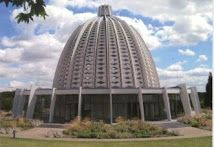
The House of Worship in Hofheim-Langenhain in Germany is the first of its kind in Europe, was inaugurated on July 4th, 1964. In her dedication address, Ruhiyyih Khanum, widow of Shoghi Effendi, said: This building is dedicated to the three fundamental truths of the Baha’I Religion: the oneness of God, the oneness of His Messengers and the oneness of mankind. Its doors are open to individuals of all religious persuasions, to all races, all ethnic groups, and all social classes. Within its walls will be heard not only prayers and scripture of our own religion, but also those of other great revealed religions of the world. We believe that these Holy Writings represent the treasure houses of the eternal basic truths, which God has revealed at different times for the guidance, and salvation of the entire human race.

The Faith of Baha’u’llah has no clergy. Baha’is believe it is the responsibility of each individual to conduct his or her own personal search for truth based on the immediate, unadulterated and unobscured Word of God. Consequently, in the House of Worship reading and chanting of Holy Scriptures from the world’s revealed religions is free of interpretation or elaboration through additional text or commentary.

Shoghi Effendi gave instructions in 1953 to build the first European House of Worship near Frankfurt am Main. A decisive factor in the choice of the location was this city’s central location with respect to both Germany and Europe as a whole.

A competition to design the House of Worship had already taken place in 1954. Following careful scrutiny of all proposals submitted by the nineteen participating architects, the design by a young Frankfurt based architect named Teuto Rocholl was selected.

The basic requirements for the structure of a House of Worship had been formulated by ‘Abdu’l Baha…….The Mashriqu’l Adhkar, which is to be erected over a central floor plan, …must have nine sides, doors, fountains, paths, gateways, columns and gardens, with the ground floor, galleries and domes, and in design and construction it must be beautiful…

The House of Worship was built using a steel concrete skeletal (exposed concrete) construction. The reconstructed steel concrete ribs were assembled on site and fixed in place with poured steel concrete rings brought into place at the lower and upper extremities of the ribs.

After three and a half years of construction, Europe’s first Baha’I House of Worship was dedicated in July 1964.

In 1987, the House of worship was declared a cultural monument by the State of Hesse (i.e. the State incorporating the City of Frankfurt and its environs).

In November 2006, I visited the Baha’i House of Worship in Germany and I enjoyed the spiritual atmosphere and I read a prayer for unity.

Thursday, June 19, 2008

Chicago Tribune


A small -town oasis


Wilmette preserves and enhances historic ambience while looking to the future


"Adding to the village's international charm is the filigree-domed Baha'i House of Worship, one of only seven Baha'i temples world- wide. Encircled by blossoms and fountains, it attracts international visitors year round. "

Wednesday, June 11, 2008

The Covenant of Baha’u’llah

Abdu’l-Baha mentioned about the power of the Covenant of Baha’u’llah that

“Know this for a certainty that today, the penetrative power in the arteries of the world of humanity is the power of the Covenant. The body of the world will not be moved through any power except through the power of the Covenant. There is no other power like unto this. This Spirit of the Covenant is the real Center of love and is reflecting its rays to all parts of the globe, which are resuscitating and regenerating man and illuminating the path to the Divine Kingdom."

Tuesday, June 3, 2008

Baha’i Election

Though the season of primaries is almost behind us, November is nearly half a year away and we could still be in for a lot more partisan politics and mudslinging. If it seems like there ought to be a more civil way to run democratic elections, members of the Baha’i faith say that’s because there is. And once a year, they refine a new democratic process in that big white temple in north suburban Wilmette. The 100th Baha’i National Convention was recently held there. Eight Forty-Eight contributor Jennifer Brandel watched the process.
Listen to the full story here:
http://chicagopublicradio.org/Content.aspx?audioID=24887

النظام الاداري البهائي
أنزل حضرة بهاء الله النظام الإداري الخاص به ، أي أنه أخبرنا عن المؤسسات البهائية التي يجب أن تعمل وتدير شئون العالم الإنساني
فلا وجود لرجال دين فى الدين البهائي بل مؤسسات بهائية هى نواة لما سيصبح فى المستقبل النظام العالمي
المؤسسات البهائية هي
بيت العدل الأعظم: وهو المؤسسة العليا فى الدين البهائي والذي يتوجه له جميع البهائيون في العالم. ويتم انتخابه كل خمس سنوات من قبل اعضاء المحافل المركزية فى العالم كله ، حيث يحق لهم انتخاب تسعة افراد بهائيين بالغين (من سن 21 سنة) من اى منطقة فى العالم.
المحفل الروحاني المركزي: ينتخب البهائيون في كل دولة أعضاؤه التسعة مرة في كل سنة، وهو المسئول عن الجامعة البهائية فى الدولة
المحفل الروحاني المحلي: هو الذي يقود شؤون الجامعة البهائية بالمدينة ويتم انتخاب أعضاؤه التسعة من قبل أعضاء الجامعة المحلية

جميع المؤسسات البهائية يتم انتخاب اعضاءها عن طريق الاقتراع السري فلا يسمح بالترشيحات او الدعاية. كما لايتلقى اعضاء المؤسسة اى اجر على مايقومون به من خدمات فهم يفعلون ذلك لوجه الله تعالى. من ناحية اخرى الانتخاب هو واجب مقدس على كل فرد بهائي ،لذلك يقوم كل فرد بالبحث والتحري بنفسه عن الاصلح لهذا النوع من الخدمة، كما يطلب التأييد والتوفيق من الله سبحانه وتعالى.

Thursday, May 29, 2008

The Ascension of Baha'u'llah

Holy day marks 116th anniversary of the passing of Baha’u’llah


Around the globe, tens of thousands more turned their faces in the direction of the same shrine – for Baha’is, the holiest spot on earth – in remembrance of the night in 28 May, 1892 that Baha’u’llah passed away at His home near Acre in the Holy Land.
His remains were entombed on the same property, now a site of pilgrimage for members of the Baha’i Faith the world over.


Baha’u’llah was born in Tehran, Iran, but He and a large group of His followers were banished from their native land in 1853 and forced to go first to Baghdad, then on to what was the Ottoman Empire and the remote prison city of Acre.


Baha’is believe that Baha’u’llah is the Messenger of God for this age, the most recent in a line of divine educators that includes Buddha, Jesus, Krishna, Mohammed, Moses, and Zoroaster, among others.


The anniversary of the Ascension of Baha’u’llah is one of nine holy days on which Baha’is suspend work.


Prayer


The praise which hath dawned from Thy most august Self, and the glory which hath shone forth from Thy most effulgent Beauty, rest upon Thee, O Thou Who art the Manifestation of Grandeur, and the King of Eternity, and the Lord of all who are in heaven and on earth! I testify that through Thee the sovereignty of God and His dominion, and the majesty of God and His grandeur, were revealed, and the Daystars of ancient splendor have shed their radiance in the heaven of Thine irrevocable decree, and the Beauty of the Unseen hath shone forth above the horizon of creation. I testify, moreover, that with but a movement of Thy Pen Thine injunction “Be Thou” hath been enforced, and God’s hidden Secret hath been divulged, and all created things 231 have been called into being, and all the Revelations have been sent down.
Bahá’u’lláh

Monday, May 5, 2008

House of Worship restoration necessitates partial closing


To enable further restoration of the Baha'i House of Worship and begin construction of the new Visitors Center, the lower level of the House of Worship, which currently houses the Visitors Center and bookstore, will be closed to the public for approximately one year, from May 19, 2008, to May 2009.

The auditorium (prayer hall), on the upper level of the House of Worship, will remain open for prayers and meditation. The elevator to the auditorium will not be available so access to the auditorium will be by stairs only during this period. The gardens are wheelchair accessible.

Guides will continue to offer tours of the temple, and restrooms will be available. During the partial closing, visitors will enter the temple from the corner of Linden Avenue and Sheridan Road, walking along the reflecting pool before ascending the stairs to the auditorium.

There will be a limited number of spaces in the House of Worship parking lot to the west of the building. Parking on nearby streets also will be available.

Saturday, May 3, 2008

Prayer for the Mashriqu'l Adhkar


"O Lord, O Thou Who dost bless all those who stand firm in the Covenant by enabling them, out of their love for the Light of the World, to expend what they have as an offering to the Mashriqu'l Adhar, the dayspring of Thy wide-spread rays and the proclaimer of Thine evidences, help Thou, both in this world and the world to come, these reghteous, these upright and pious ones to draw ever nearer to Thy sacred Threshold, and make bright their faces with Thy dazzling splendors.
Verily art Thou the Generous, the Ever-Bestowing."

Abdu'l Baha