Showing posts with label Baha'i Faith. Show all posts

Wednesday, July 10, 2013

114 Baha'i Youth Conferences around the World


The Essential Role of Baha'i Youth

"Once the youth learns that this Cause is their Cause, and that through it they can ensure their future social tranquility and spiritual progress, then they will arise and consecrate their life to the promotion of this Faith. And no one can awaken the youth of the world to a consciousness of this road to salvation ex-cept from their own numbers—youths already inspired with the Bahá’í spirit."
 
Shoghi Effendi

To every generation of young believers comes an opportunity to make a contribution to the fortunes of humanity, unique to their time of life. For the present generation, the moment has come to reflect, to commit, to steel themselves for a life of service from which blessing will flow in abundance.

For more details and to register to attend a conference in the United States, visit the youth conferences website at www.youthconf.bahai.us

City                             Dates                                 Venue
      Atlanta                  August 9-11     (Fri-Sun)    Atlanta Marriott Marquis
      Boston                   July 19-21         (Fri-Sun)    Hynes Convention Center
      Chicago                 July 13-15         (Sat-Mon)  Renaissance Hotel, Schaumburg
      Dallas                    August 9-11     (Fri-Sun)    Hilton Anatole
      Durham                 July 18-20         (Thu-Sat)   Raleigh Convention Center
      Houston                August 23-25   (Fri-Sun)    Crowne Plaza Houston near Reliant-Medical    

      Los Angeles         Aug 31-Sept 2  (Sat-Mon)  University of California at Los Angeles
      Minneapolis         August 16-18   (Fri-Sun)    Carleton College, Northfield
      Oakland                 July 26-28         (Fri-Sun)    Hyatt Regency San Francisco Airport
      Phoenix                  July 19-21         (Fri-Sun)    Phoenix Convention Center
      San Diego              August 9-11     (Fri-Sun)    Town and Country Resort & Convention Center
      Seattle                    July 26-28         (Fri-Sun)    TBA
      Washington, DC  August 16-18   (Fri-Sun)    Hyatt Regency Crystal City
 

Tuesday, February 19, 2013

Ayyám Al Há - أيام الهاء

The Baha'i calendar consists of 19 months and the Baha’i month consists of 19 days, giving 361 days, requiring the addition of four or five more days. Ayyám Al Há form the intercalary days that fill out the 365 or 366 days of the solar year.

Baha'u'llah specified in the Kitáb Al Aqdas that the Days of Ha should be inserted in the calendar just before the month of fasting:
"Let the days in excess of the months be placed before the month of fasting. We have ordained that these, amid all nights and days, shall be the manifestations of the letter Há, and thus they have not been bounded by the limits of the year and its months...and when they end--these days of giving that precede the season of restraint--let them enter upon the Fast. Thus hath it been ordained by Him Who is the Lord of all mankind."

This holiday begins each year on the evening of February 25 and ends at sunset on March 1st. Of this period Bahá'u'lláh writes:
"It behoveth the people of Bahá, throughout these days, to provide good cheer for themselves, their kindred and, beyond them, the poor and needy, and with joy and exultation to hail and glorify their Lord, to sing His praise and magnify His Name."

As in His prayer for Ayyám Al Há, Bahá'u'lláh juxtaposes these "days of giving" with the Fast's "season of restraint." Ayyám Al Há is intended partly as spiritual preparation for the Fast, a reminder of its approach, and a way of fostering the detachment from material things so necessary for the Fast.

“Ayyam Al Ha" is an Arabic phrase means literally the "Days of Ha" ("Ha" is an Arabic letter corresponding to the English "H") the numerical value of "Há" is 5, the sum of the numerical values of the letters in the "Báb," and the maximum number of intercalary days."Há" is also the first letter of an Arabic pronoun commonly used in Arabic religious writings to refer to God, or "the Divine Essence." "Há" by itself is used as a symbol of "the Essence of God," and was the subject of many Arabic essay on its mysteries.

Bahá'u'lláh has designated the intercalary days "amid all the nights and days" as manifestations of the letter Há"--that is, as Days of the Divine Essence. Thus Ayyám Al Há can be thought of as days that symbolize eternity, infinity, and the mystery and unknowable Essence of God Himself. Contemplation during these days of the timeless mystery of the Essence of God provides us the "joy and exultation" with which to "sing His praise and magnify His Name."

 
أيام الهاء

يتبع التقويم البهائي السنة الشمسية التي تتألف من 365 يوما وخمس ساعات وخمسين دقيقة. وتتألف السنة البهائية من تسعة عشر شهرا، كل شهر منها تسعة عشر يوما سُميت على أسماء صفات الله (فيكون المجموع 361 يومًا) يضاف إلى ذلك الأيام الزائدة وهي أربعة أيام، أو خمسة أيام في السنوات الكبيسة. هذه الايام الزائدة سميت بأيام الهاء وقد حدد حضرة بهاء الله موقعها في السنة البهائية بان تكون قبل شهر الصوم العلا
:15يتفضل حضرة بهاء الله في الكتاب الاقدس، فقرة
واجعلوا الايام الزّائدة عن الشّهور قبل شهر الصّيام، انّا جعلناها مظاهر الهاء بين اللّيالي والايام لذا ما تحددّت بحدود السّنة والشّهور، ينبغي لاهل البهاء ان يطعموا فيها انفسهم وذوي القربى ثم الفقراء والمساكين، ويهللنّ ويكبّرنّ ويسبّحنّ ويمجّدنّ ربّهم بالفرح والانبساط. واذا تمّت ايام الاعطاء قبل الامساك، فليدخلنّ في الصّيام كذلك حكم مولى الانام

تبدأ أيام الهاء كل عام مساء يوم الخامس والعشرين من شهر فبراير وتنتهي عند غروب شمس اليوم الأول من شهر مارس. وقد أوصى حضرة بهاء الله بإقامة الولائم، والضيافة، والإنفاق على الفقراء والمساكين، احتفالا بها

وتعقد فيها اجتماعات بكلّ محبّة وسرور وابتهاج وتتزيّن فيها مجالس عامّة ويكون الجميع فيها زمرة واحدة، فتتجسّد في الأبصار وحدة الأمّة وألفتها واتّحادها
حضرة عبد البهاء

المدلولات الروحانية لايام الهاء
هذه الأيام الزائدة على الشهور قد امتازت بانتسابها إلى "الهاء" وهو حرف يساوي في الحساب الأبجدي العدد خمسة، وهو أكبر عدد يمكن أن تصل إليه عدة أيام الهاء. وكذلك يشير حرف الهاء إلى مدلولات ومعان روحانية، ومن جملة ما يرمز إليه "الهوية الإلهية"، أي" ذات الغيب المنيع"، أي" الله" سبحانه وتعالى.وهي تعتبر اعداداً روحانياً لفترة الصوم

هذه ايام الهاء وأمرنا الكل أن ينفقوا فيها على انفسهم وعلى الذين توجهوا إلى هذا المقام المرفوع أن اذكروا الله فيها ثم اعرفوا قدرها لأنها تحكي عن هذا الاسم الذي به سخر الله الغيب والشهود
حضرة بهاء الله

قد تشرفت الأيام يا إلهي بالأيام التي سميتها بالهاء كأن كل يوم منها جعلته مبشراً ورسولاً ليبشر الناس بالأيام التي فيها فرضت الصيام على خلقك وبريتك ليستعد كل نفس للقائها ويعين في قلبه محلاً لها ويطهره باسمك لنزولها عليه
حضرة بهاء الله

Thursday, May 5, 2011

The Baha'i House of Worship in India

The Baha’i House of Worship in New Delhi, India commonly called the Lotus Temple is one of the marvels of modern architecture. The temple gives the impression of a half-open lotus flower afloat, surrounded by its leaves. The shining pure white marble, the majestic dome, the petals clearly standing out create a sense of grandeur and awe. It has received an average of 4.3 million visitors every year – from all nations, religions and walks of life.Since its inauguration to public worship and visits in December 1986, the Baha’i House of Worship in New Delhi, India has drawn to its portals more than 70 million visitors, making it one of the most visited edifices in the world. On an average, 8,000 to 10,000 people visit the Baha’i House of Worship each day. These visitors have admired its universal design in the form of a lotus and have been fascinated by the Teachings of the Baha’i Faith, especially its tenets of the Oneness of God, the Oneness of Religions, and the Oneness of Mankind. This ‘Lotus’ casts its benevolent glance over vast green lawns and avenues covering an expanse of 26 acres of land.


All around the lotus are walkways with beautiful curved balustrades, bridges and stairs that surround the nine pools representing the floating leaves of the lotus. It is a remarkable tabernacle of peace and beauty and an engineering feat that will set standards for centuries.Capturing the imagination with its simplicity and elegance this monument in marble is dedicated to the purpose of prayer, meditation and spiritual upliftment. From within its hallowed precincts rise in praise and glorification of the Almighty voices in unison, of Baha’is, Hindus, Muslims, Jews, Christians, Buddhists and Zoroastrians people of all castes, colors and cultures. There is no clergy in the Baha’i House of Worship, no idols, no pictures, no sermons, and no rituals. It is a place for communication between man and his Creator, God.

Saturday, March 19, 2011

The Baha'i New Year "Naw-Ruz"

166 Year of the Baha'i Era

"It is a New Year; that is to say, the rounding of the cycle of the year. A year is the expression of a cycle of the sun; but now is the begining of a cycle of Reality, a New Cycle, a New Age, a New Century, a New Time and a New Year. Therefor it is very blessed"
Abdu'l Baha


The Baha’i New Year starts on March 21, (the vernal equinox) which marks the first day of spring and the end of the Baha'i Faith’s annual Nineteen Day Fast. Naw Ruz means new day in Persian and it is one of nine holy days on which Baha’is suspend work. They typically celebrate the holy day at sunset on March 20 by gathering for prayer, as the sunset on which the holiday begins comes at the end of the Fast.


Baha'is follow the Badi ("wonderful") calendar, which consists of 19 months of 19 days each (361 days), with the addition of "Intercalary Days" (four in ordinary and five in leap years) between the 18th and 19th months to adjust the calendar to the solar year.

The months are named after the attributes of God. The Baha’i New Year is astronomically fixed and begins with the March equinox (March 21). The Baha’i Era commenced with the year of the Bab’s declaration (1844 A.D.).

Wednesday, March 2, 2011

The Baha'i Fast


The Baha'i year consists of 19 months and the Baha’i month consists of 19 days . Each month named after the attributes of God.The First month’s name is Bahá. It is an Arabic word which means Splendor. The second month is the month of Jalál (Glory), Jamál (Beauty ),…etc . The nineteenth month (‘Alá - Loftiness) is the month of the fast, usually 2–20 March, immediately after the termination of the Intercalary Days (Ayyam Al Ha), and is followed by the feast of Naw-Rúz.


During these nineteen days the fast is observed by abstaining from both food and drink from sunrise to sunset. As the month of the fast ends at the March equinox, the fast always falls in the same season, namely, spring in the Northern, and autumn in the Southern, Hemisphere; never in the extreme heart of summer nor in the extreme cold of winter, when hardship would be likely to result. At that season, moreover, the interval between sunrise and sunset is approximately the same all over the habitable portion of the globe, namely, from about 6 A.M. to 6 P.M.

“O Pen of the Most High! Say: O people of the world! We have enjoined upon you fasting during a brief period, and at its close have designated for you Naw-Rúz as a feast. Thus hath the Day-Star of Utterance shone forth above the horizon of the Book as decreed by Him Who is the Lord of the beginning and the end.”
Baha'u'llah , the Kitáb Al Aqdas-p16

“These are the ordinances of God that have been set down in the Books and Tablets by His Most Exalted Pen. Hold ye fast unto His statutes and commandments, and be not of those who, following their idle fancies and vain imaginings, have clung to the standards fixed by their own selves, and cast behind their backs the standards laid down by God. Abstain from food and drink from sunrise to sundown, and beware lest desire deprive you of this grace that is appointed in the Book.”
Baha'u'llah , the Kitáb Al Aqdas-p17

Fasting is enjoined on all the believers once they attain the age of 15 and until they reach the age of 70 years. But it is not binding on children and invalids, on travelers, or on those who are too old or too weak (including women who are with child or have babes at the breast).

“The traveller, the ailing, those who are with child or giving suck, are not bound by the Fast; they have been exempted by God as a token of His grace. He, verily, is the Almighty, the Most Generous.”
Baha'u'llah , the Kitáb Al Aqdas-p16

The spiritual meaning of Fast:

There is much evidence to show that a periodical fast such as is enjoined by the Bahá’í teachings is beneficial as a measure of physical hygiene, but just as the reality of the Bahá’í fast does not lie in the consumption of physical food, but in the commemoration of God, which is our spiritual food, so the reality of the Bahá’í fast does not consist in abstention from physical food, although that may help in the purification of the body, but in the abstention from the desires and lusts of the flesh, and in severance from all save God.

“Fasting is a symbol. Fasting signifies abstinence from lust. Physical fasting is a symbol of that abstinence, and is a reminder; that is, just as a person abstains from physical appetites, he is to abstain from self-appetites and self-desires. But mere abstention from food has no effect on the spirit. It is only a symbol, a reminder. Otherwise it is of no importance. Fasting for this purpose does not mean entire abstinence from food. The golden rule as to food is, do not take too much or too little. Moderation is necessary. There is a sect in India who practice extreme abstinence, and gradually reduce their food until they exist on almost nothing. But their intelligence suffers. A man is not fit to do service for God with brain or body if he is weakened by lack of food. He cannot see clearly.”
‘Abdu’l-Bahá

Shoghi Effendi indicates that the fasting period is:
“…essentially a period of meditation and prayer, of spiritual recuperation, during which the believer must strive to make the necessary readjustments in his inner life, and to refresh and reinvigorate the spiritual forces latent in his soul. Its significance and purpose are, therefore, fundamentally spiritual in character. Fasting is symbolic, and a reminder of abstinence from selfish and carnal desires.”

The importance of obeying God’s commandments and laws:

“O ye peoples of the world! Know assuredly that My commandments are the lamps of My loving providence among My servants, and the keys of My mercy for My creatures. Thus hath it been sent down from the heaven of the Will of your Lord, the Lord of Revelation. Were any man to taste the sweetness of the words which the lips of the All-Merciful have willed to utter, he would, though the treasures of the earth be in his possession, renounce them one and all, that he might vindicate the truth of even one of His commandments, shining above the Dayspring of His bountiful care and loving-kindness.”
Baha'u'llah , the Kitáb Al Aqdas-p3

"O SON OF BEING! Walk in My statutes for love of Me and deny thyself that which thou desirest if thou seekest My pleasure."

Baha'u'llah , The Arabic Hidden Words – No.38

Friday, December 3, 2010

Baha’u’llah’s Writing

60% of Baha’u’llah’s writing is in Arabic and 40% of his writing is in Persian.


“Although there can be no question or doubt as to the sweetness of the Persian tongue, yet it hath not the scope of the Arabic. There are many things which have not been expressed in Persian, that is to say, words referring to such things have not been devised, whilst in Arabic there are several words describing the same thing. Indeed there existeth no language in the world as vast and comprehensive as Arabic”


From a Tablet to Abu’l-Fadl -The Tabernacle of Unity – Baha’u’llah

Wednesday, July 8, 2009

The Báb, Forerunner of Bahá’u’lláh

On July 9, members of the Baha’i Faith commemorate the anniversary of the Martyrdom of the Bab (“the gate” in Arabic), one of nine holy days on which members of the Baha’i Faith suspend work and school.

The Báb referred to this coming Divine Teacher as “Him Whom God shall make manifest” and stated that “no words of Mine can adequately describe Him, nor can any reference in My Book, the Bayan, do justice to His Cause.” He clarified the central aim of His mission by explaining that “the purpose underlying this Revelation, as well as those that preceded it, has, in like manner, been to announce the advent of the Faith of Him Whom God will make manifest.” The basis for all human accomplishment is to be found in the teachings of this promised universal Manifestation of God, and “the sum total of the religion of God is but to help Him.” For the Báb, a climacteric in human history had been reached, and He was the “Voice of the Crier, calling aloud in the wilderness of the Bayan” announcing to humanity that it was entering the period of its collective maturity.

Throughout His writings, the Báb warned His followers to be watchful, and as soon as the promised Teacher revealed Himself, to recognize and follow Him. The Báb exhorted them to see with the “eye of the spirit” rather than through their “fanciful imaginations.” To be worthy of “Him Whom God shall make manifest” required entirely new standards of conduct, a nobility of character that human beings had theretofore not achieved: “Purge your hearts of worldly desires,” the Báb urged His first group of disciples, “and let angelic virtues be your adorning...The time is come when naught but the purest motive, supported by deeds of stainless purity, can ascend to the throne of the Most High and be acceptable unto Him...”

The boldness of the Báb’s proclamation—which put forth the vision of an entirely new society—stirred intense fear within the religious and secular establishments. Accordingly, persecution of the Bábis quickly developed. Thousands of the Báb’s followers were put to death in a horrific series of massacres. The extraordinary moral courage evinced by the Bábis in the face of this onslaught was recorded by a number of Western observers. European intellectuals such as Ernest Renan, Leo Tolstoy, Sarah Bernhardt and the Comte de Gobineau were deeply affected by this spiritual drama that had unfolded in what was regarded as a darkened land. The nobility of the Báb’s life and teachings and the heroism of His followers became a frequent topic of conversation in the salons of Europe. The story of Tahirih, the great poet and Bábi heroine, who declared to her persecutors, “You can kill me as soon as you like, but you cannot stop the emancipation of women,” traveled as far and as quickly as that of the Báb Himself.

Ultimately, those opposed to the Báb argued that He was not only a heretic, but a dangerous rebel. The authorities decided to have Him executed. On 9 July 1850, this sentence was carried out, in the courtyard of the Tabriz army barracks. Some 10,000 people crowded the rooftops of the barracks and houses that overlooked the square. The Báb and a young follower were suspended by two ropes against a wall. A regiment of 750 Armenian soldiers, arranged in three files of 250 each, opened fire in three successive volleys. So dense was the smoke raised by the gunpowder and dust that the entire yard was obscured.

The report of the execution, written to Lord Palmerston, the British Secretary of State for Foreign Affairs, by Sir Justin Shiel, Queen Victoria’s Envoy Extraordinary and Minister Plenipotentiary in Tehran on July 22, 1850, records: “When the smoke and dust cleared away after the volley, Báb was not to be seen, and the populace proclaimed that he had ascended to the skies. The balls had broken the ropes by which he was bound but he was dragged from the recess where, after some search he was discovered and shot.”

After the first attempt at execution, the Báb was found back in His cell, giving final instructions to one of His followers. Earlier in the day, when the guards had come to take Him to the courtyard, the Báb had warned that no “earthly power” could silence Him until He had finished all that He had to say. When the guards arrived this second time, the Báb calmly announced: “Now you may proceed to fulfill your intention.”

Again, the Báb and His young companion were brought out for execution. The Armenian troops refused to fire, and a Muslim firing squad was assembled and ordered to shoot. This time the bodies of the pair were shattered, their bones and flesh mingled into one mass. Surprisingly, their faces were untouched. The light of the “Mystic Fane,” as the Báb referred to Himself, had been quenched under a dramatic set of circumstances.The last words of the Báb to the crowd were: “O wayward generation! Had you believed in Me every one of you would have followed the example of this youth, who stood in rank above most of you, and would have willingly sacrificed himself in My path. The day will come when you will have recognized Me; that day I shall have ceased to be with you.”

Sunday, April 26, 2009

Northbrook Interfaith Walk

"Consort with the followers of all religions in a spirit of friendliness and fellowship" Baha'u'llah

The Northbrook Baha'i Community invites you to come and learn new ways of eliminating all forms of prejudice, at Northbrook public library in the Civic Room. A Family Friendly event!

Bike the Walk, Walk the Walk, or drive. Visit participating Houses of Worship and experience the rich cultural diversity that exists right in our own backyard. Come together to learn, experience and enjoy!

Northbrook is home to marvelous variety of religious traditions. The Northbrook Clergy Association and the Northbrook Community Relations Commission are co-sponsoring the Northbrook Interfaith Walk that will open the doors to 17 religious institutions for all to enjoy on Sunday April 26, 2009 from 1-4 PM.

The religious diversity of our community is a gift. This opportunity to learn about traditions of those that differ from our own is a unique one. We have the great opportunity to model mutual respect and the shared values of care and justice in a world that too often closes doors before reaching out.

Thursday, February 19, 2009

Washington Post/Newsweek “On Faith” blog

The religious leaders on the panel are sent a new question each week. The question of this week is:

“Should a layperson read sacred texts alone, without the help of clergy or community? How do you read and study sacred texts?”
Mr. Kenneth Bowers, Secretary General of the National Spiritual Assembly of the Baha'is of the Unaited States, response by the folowing:

A Duty and Privilege to Investigate Truth

Both individual and group study of sacred scriptures are essential aspects of living a life of spiritual advancement and service to humanity. The Word of God has a dynamic effect on the mind and spirit when approached in a spirit of regular study, action and reflection. Bahá'ís consider the scriptures of the major religions of the world--including the Writings of Bahá'u'lláh, the Qur'an, the Old and New Testaments, and Buddhist and Hindu scriptures--as repositories of the Word of God and treasure houses of profound insights to be discovered and applied over a lifetime.

The Bahá'í Faith has no clergy, and the Founder of our Faith, Bahá'u'lláh, enjoined all believers to study the scriptures daily and reflect on their meaning and application to their daily lives. Bahá'u'lláh wrote: "Immerse yourselves in the ocean of My words, that ye may unravel its secrets, and discover all the pearls of wisdom that lie hid in its depths." By interacting with the Word of God, believers not only reach greater depths of understanding, but bring the scriptures to life by expressing them in their daily actions and moral choices.

Regular group study of the scriptures is also beneficial and complementary. Throughout the world, Bahá'ís host study circles for in-depth and systematic study of the scriptures. These study circles are facilitated by volunteer tutors, and participants learn together in a spirit of mutual support and respect. The group setting provides a network of support for taking the lessons gleaned from the scriptures and applying them to the challenges and opportunities that surround us each day--in our family life and parenting, in our work or professions, and in our service to our neighborhoods and communities.

The Bahá'í approach to studying scriptures is thus flexible and emphasizes both personal and collective interaction with the Word of God. We each have the duty and privilege of independent investigation of truth using the faculties of discernment and understanding that each soul has been endowed with by God. Different insights and perspectives on the scriptures enrich the community, but no one's interpretation is considered authoritative or binding on others. Within the Bahá'í community, a diversity of understandings can flourish under a framework of elected Assemblies in which differences are resolved through consultation.

Engaging with the Word of God is a source of illumination, of gladness and comfort for the soul. Ultimately this is the touchstone for the proper study of scripture. Bahá'u'lláh wrote: "Should a person recite but a single verse from the Holy Writings in a spirit of joy and radiance, this would be better for him than reciting wearily all the Scriptures of God, the Help in Peril, the Self-Subsisting. Recite ye the verses of God in such measure that ye be not overtaken with fatigue or boredom. Burden not your souls so as to cause exhaustion and weigh them down, but rather endeavour to lighten them, that they may soar on the wings of revealed Verses unto the dawning-place of His signs. This is conducive to nearer access unto God, were ye to comprehend."

Saturday, December 27, 2008

Prayer for America

" O Thou kind Lord! This gathering is turning to Thee. These hearts are radiant with Thy love. These minds and spirits are exhilarated by the message of Thy gladtidings. O God! Let this American democracy become glorious in spiritual degrees even as it has aspired to material degrees, and render this just government victorious. Confirm this revered nation to upraise the standard of the oneness of humanity, to promulgate the Most Great Peace, to become thereby most glorious and praiseworthy among all the nations of the world. O God! This American nation is worthy of Thy favors and is deserving of Thy mercy. Make it precious and near to Thee through Thy bounty and bestowal. _'Abdu'l-Baha

This prayer was revealed by Abdu'l-Baha on the occasion of his visit to the United States of America in 1912; he was travelling from April through December touring North America.

Abdu'l-Baha is the son of Baha'u'lla the profit founder of the Baha'i religion.

Baha'u'llah is regarded by Baha'is as the most recent in the line of Messengers of God that stretches back beyond recorded time and that includes Abraham, Moses, Buddha, Zoroaster, Christ, and Muhammad.

Saturday, September 6, 2008

Advancement of Women

Equality of the sexes is a fundamental principle of the Bahá’í Faith. The teachings of Bahá’u’lláh, its founder, uphold the full spiritual and social equality of women and men. The Bahá’í community supports and encourages the full participation of women in all aspects of community life, including leadership and decision-making.

"All should know, and in this regard attain the splendours of the sun of certitude, and be illumined thereby: Women and men have been and will always be equal in the sight of God. The Dawning-Place of the Light of God sheddeth its radiance upon all with the same effulgence. Verily God created women for men, and men for women. The most beloved of people before God are the most steadfast and those who have surpassed others in their love for God, exalted be His glory.... "
Selection From the Writings of Bahá'u'lláh

The Bahá’í Faith has no clergy, and both men and women are encouraged to share in all aspects of Bahá’í community life. At the local level, the affairs of the Bahá’í community are the responsibility of elected institutions known as Local Spiritual Assemblies. These nine-member councils are elected annually from among all adult Bahá’ís residing in a locality. At the national level, the community is governed by the National Spiritual Assembly of the Bahá’ís of the United States, which has been elected annually since 1909.

"In this Day the Hand of divine grace hath removed all distinctions. The servants of God and His handmaidens are regarded on the same plane. Blessed is the servant who hath attained unto that which God hath decreed, and likewise the leaf moving in accordance with the breezes of His will."
Selection From the Writings of Bahá'u'lláh

Women’s equal participation in society is regarded by the Bahá’í community as one of the most important prerequisites of peace. Denial of women’s equality not only inflicts injustice and suffering on women, but also promotes harmful attitudes and habits in men that are carried from the family to the workplace, to political life and ultimately to international relations. Only as women are welcomed into full partnership in all fields of human endeavor will the moral and psychological climate be created in which international peace can emerge.

"And among the teachings of Bahá'u'lláh is the equality of women and men. The world of humanity has two wings -- one is women and the other men. Not until both wings are equally developed can the bird fly. Should one wing remain weak, flight is impossible. Not until the world of women becomes equal to the world of men in the acquisition of virtues and perfections, can success and prosperity be attained as they ought to be."
Selection From the Writings of `Abdu'l-Bahá

In partnership with other organizations, local Bahá’í communities are active participants in events promoting the status of women including International Women’s Day, human rights education and peace activities.

"It is my hope that the banner of equality may be raised throughout the five continents where as yet it is not fully recognized and established. In this enlightened world of the West woman has advanced an immeasurable degree beyond the women of the Orient. And let it be known once more that until woman and man recognize and realize equality, social and political progress here or anywhere will not be possible. For the world of humanity consists of two parts or members: one is woman; the other is man. Until these two members are equal in strength, the oneness of humanity cannot be established, and the happiness and felicity of mankind will not be a reality. God willing, this is to be so."
Selection From the Writings of `Abdu'l-Bahá

المساواة بين الرجال والنساء في الحقوق والواجبات

إنَّ الدين البهائي يدعو إلى تساوي حقوق المرأة بالرجل. فقد أكدَّ حضرة بهاءالله وحضرة عبدالبهاء بأنَّ المرأة لديها القدرات العقلية المساوية للرجل وفي المستقبل تستطيع المرأة إظهار طاقاتها لكي تحقق انتصارات في المجالات الذهنية والعلمية في جميع أوجه الشئون الإنسانية.
وفي مؤتمر اجتماع حرية المرأة في لندن في يناير ١٩١٣ قال حضرة عبدالبهاء مترجماً

إن الإنسانية كالطائر ذي الجناحين أولهما الذكر والآخر الأنثى، وما لم يكن الجناحان قويين تحركهما قوة واحدة فإن الطير لا يقدر أن يطير نحو السماء. فتبعاً لروح هذا العصر يجب أن تتقدم النساء ليتممن رسالتهن في الحياة، ولهذا يجب أن يتساوين مع الرجال. إن أحد تعاليم حضرة بهاءالله المهمة هو أن تصبح النساء في مستوى واحد مع الرجال، وأن يتمتعن بحقوق وامتيازات وفرص مساوية لحقوق الرجال وفرصهم وامتيازاتهم... والآن يجب على النساء أن يمضين في التقدم وأن يوسعْن معلوماتهن في العلوم والآداب والتاريخ لأجل إكمال الإنسانية. فعن قريب سوف ينلن حقوقهن، ويعلم الرجال أن النساء جادّات في عملهن ويحافظن على كرامتهن ويترقين في الحياة السياسية والمدنية. ويقفن حجر عثرة في سبيل الحرب ويطالبن بحقوق الانتخاب والمساواة في كل الامتيازات التي يتمتع بها الرجال.

مختصر المبادئ البهائية، الطبعة الرابعة، نيسان ١٩٩٧، ص٣٥-٣٦

وبفضل الروح التي بثها حضرة بهاءالله في العالم منذ قرن ونصف ونيّف، فإن البشرية الآن تقف على أعتاب أولى مرحلة نضجها، وأصبحنا نرى المرأة تجد طريقها في كثير من ميادين الخدمة الاجتماعية والإنسانية والصحية وحتى غزت عالم السياسة بكل جدارة وإبداع، فانطلقت منها القوى التي كانت حبيسة أفكار وتقاليد ابتدعها الرجل للحفاظ على مكانته في السيطرة والاستئثار بكل شئ متذرعاً بأن المرأة ضلع قاصر ناقص، ومكانها اللائق بها هو البيت واقتصار دورها على واجباتها البيتية فقط. أما الآن فإننا أصبحنا في قرن امتزجت فيه قدرات الرجال وخبراتهم ونضجهم مع قدرات النساء وفضائلهن وما يمتزن به، وبذلك استطاعت البشرية أن تبدأ تحلقها المتزن في سماء ازدهار العالم الإنساني، وهذا ما سيؤدي إلى الحد من نشوب الحروب المدمرة وإقامة دعائم السلام المنشود. فيتفضل حضرة عبدالبهاء بقوله:
مرَّت البشرية في العصور السالفة بمراحل من النقص والفتور لأنَّها لم تكن كاملة. فالحروب وآثارها قد أصابت العالم بآفاتها. إنَّ تعليم المرأة سوف يكون خطوة جيدة نحو إنهاء الحروب والقضاء عليها ذلك لأنَّ المرأة ستستخدم كامل تأثيرها ضد الحرب… وفي الحقيقة فإنَّ المرأة ستكون عنصراً رئيسياً في تأسيس السلام العالمي والمحكمة الدولية. وبالتأكيد ستعمل المرأة على إنهاء الحروب بين الجنس البشري.

- The Promulgation of Universal Peace ص ۱٠٨من كتاب

:وفي مقام آخر يتفضل

"... وفي التوراة قال تعالى: ’وخلق الله الإنسان على صورته‘ وجاء في الحديث النبوي: ’خلق الله آدم على صورته‘ والمقصود بهذه الصورة الصورة الرحمانية يعني أن الإنسان صورة الرحمن ومظهر صفات الله، والله حي والإنسان حي أيضاً. والله بصير والإنسان بصير. والله سميع والإنسان سميع أيضاً. والله مقتدر والإنسان مقتدر أيضاً. اذن فالإنسان آية الرحمن وهو صورة الله ومثاله وهذا تعميم لا تخصيص بالرجال دون النساء. لأنه ليس عند الله ذكور وإناث وكل من هو أكمل فإنه أقرب الى الله سواء كان رجلا أم امرأة. لكن النساء لم يربين حتى الآن تربية الرجال ولو ربين كذلك لأصبحن مثل الرجال. وعندما ننظر الى التاريخ نرى كم من شهيرات النساء وجدن في عالم الأديان وفي عالم السياسة..." إن عدم اشتراك المرأة في الماضي اشتراكاً متكافئاً مع الرجل في شؤون الحياة، لم يكن أمراً أملته طبيعتها بقدر ما برّره نقص تعليمها وقلة مرانها وأعباء عائلتها وعزوفها عن النزال والقتال. أمَا وقد فتحت اليوم أبواب التعليم أمام المرأة، وأتيح لها مجال الخبرة بمساواة مع الرجل، وتهيأت الوسائل لإعانتها في رعاية أسرتها، وأضحى السلام بين الدول والشعوب ضرورة تقتضيها المحافظة على المصالح الحيوية للجنس البشري، لم يعد هناك لزوم لابقاء امتياز الرجل بعد زوال علته وانقضاء دواعيه. إن تحقيق المساواة بين عضوي المجتمع البشري يتيح الاستفادة التامة من خصائصها المتكاملة، ويسرع بالتقدم الاجتماعي والسياسي، ويضاعف فرص الجنس البشري لبلوغ السعادة والرفاهية."

- "الدين البهائي" الصادر عن الجامعة البهائية العالمية عام ۱٩٩٤م

:كما يوجه حضرة عبدالبهاء نداءه لكل الذين بيدهم مفتاح الفرص أمام النساء بقوله

اسعوا حتى ُتظهروا للعالم الإنساني بأن المرأة أكثر قدرة وإتقاناً في عملها وان قلبها أكثر حناناً وأسرع تأثراً من قلب الرجل وأكثر محبة لخير البشر وأكثر اهتماماً بمعاناة الناس واحتياجاتهم وأشد صلابة في مقاومتها للحروب ومحبة للسلام. اسعوا حتى تصبح فكرة السلام العالمي حقيقة بجهود المرأة لأن الرجل أكثر ميولا للحرب من المرأة وبذلك يظهر تفوق المرأة ويتجلى من خلال خدماتها وفعاليتها في تأسيس السلام العالمي.

The Promulgation of Universal Peace ص ۲٨٤من كتاب

Tuesday, August 5, 2008

American Jazz musicians compose winning song for Olympics

BRUNSWICK, Georgia, United States — Two U.S. jazz musicians combined their knowledge of Chinese music, Brazilian samba, and American jazz to write one of the songs being featured at the Beijing Olympic Games.


“Beijing Olympics Hao Yuing (Good Luck),” composed by Phil Morrison and Keith Williams, was one of only about 30 works selected in the final phase of a competition sponsored by the Beijing Olympic Committee.

The contest began four years ago, with the final segment alone drawing more than 3,000 entries, organizers said. The Olympic Games begin on 8 August.

Although songs were solicited from everywhere, rules said that compositions should reflect “the unique cultural background and humanism of Beijing and China.”

Mr. Morrison and Mr. Williams – long-time Baha’is who have recorded in China and performed there numerous times over the past decade – were told that they were the only American-born artists with a winning song in the competition. Only a handful of songs from outside China were selected as winners, according to the notification letter they received.

The lyrics of their song convey some of the principles of the Baha'i Faith: “Just one human family – the earth will celebrate – for world unity” and “Promoting peace and friendship for all – the world will come together – we’ll open up the gate.”

The two, along with a drummer or other musician, perform as the Phil Morrison Trio featuring Keith Williams.

Mr. Morrison, a bassist and composer, has worked as a musician virtually his whole life, first in his native Boston and later touring internationally. He played for about five years with the group of Freddy Cole (younger brother of Nat King Cole), during which time he frequently performed in Brazil. He now lives in Brunswick, Georgia, in the United States.

Mr. Williams, originally from San Francisco, is a singer, pianist, composer, and arranger who graduated from the Berklee College of Music in Boston. He has performed with Dizzy Gillespie and Lionel Hampton, and for five years had his own trio in Atlanta. He also lives in Brunswick.
As leaders of the World Unity Jazz Ensemble – a name they still use for certain performances – Mr. Morrison and Mr. Williams released the albums “China Sky” and “Hollow Reed.”

In the Olympic song competition, many of the winning compositions are anthems, but Mr. Williams said “Beijing Olympics Hao Yuing” has more the flavor of a party celebration.

“The lyrics say, ‘Come join us in the human family,’” he said, noting that they had been told that their song would be on the official Olympics CD put out by Sony Music.

Their composition for the Olympics can be heard on the Web site http://www.philmorrisontrio.com/.

Sunday, August 3, 2008

Baha'i House of Worship in Uganda


This unique and beautiful building, situated on the crest of Kikaya Hill, four miles from the center of Kampala on Gayaza Road, was started in May 1957 and opened to the public on January 15, 1961.

The building is 124 feet high, and its dome is 44 feet in diameter. It has a seating capacity for 800 people. From its circular verandah entry to the House of Worship can be made from any of its nine doors.

The green dome is made of tiny glazed mosaic tiles from Italy, while the lower roof tiles are from Belgium. The other walls are of precast stone quarried in Uganda. From Britain came the reinforcing steel and window frames and fittings. Germany supplied the colored glass. All the timber used for the doors and benches is from Uganda forests. The exquisite carpeting is of Persian make.

The Baha’i House of Worship is the central edifice of what will eventually be a group of buildings dedicated to the social, humanitarian, educational, scientific, as well as the spiritual aspects of Bahá’í community life. People of all faiths are welcome to use this Temple for prayer and meditation at any time.

Regular services are conducted which consists solely of reading singing and chanting of the Word of God from the Holy Scripture of the world’s great religions.

Sunday, June 22, 2008

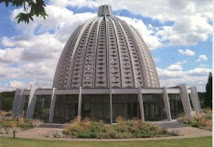
The Baha'i House of Worship in Germany


The House of Worship in Hofheim-Langenhain in Germany is the first of its kind in Europe, was inaugurated on July 4th, 1964. In her dedication address, Ruhiyyih Khanum, widow of Shoghi Effendi, said: This building is dedicated to the three fundamental truths of the Baha’I Religion: the oneness of God, the oneness of His Messengers and the oneness of mankind. Its doors are open to individuals of all religious persuasions, to all races, all ethnic groups, and all social classes. Within its walls will be heard not only prayers and scripture of our own religion, but also those of other great revealed religions of the world. We believe that these Holy Writings represent the treasure houses of the eternal basic truths, which God has revealed at different times for the guidance, and salvation of the entire human race.

The Faith of Baha’u’llah has no clergy. Baha’is believe it is the responsibility of each individual to conduct his or her own personal search for truth based on the immediate, unadulterated and unobscured Word of God. Consequently, in the House of Worship reading and chanting of Holy Scriptures from the world’s revealed religions is free of interpretation or elaboration through additional text or commentary.

Shoghi Effendi gave instructions in 1953 to build the first European House of Worship near Frankfurt am Main. A decisive factor in the choice of the location was this city’s central location with respect to both Germany and Europe as a whole.

A competition to design the House of Worship had already taken place in 1954. Following careful scrutiny of all proposals submitted by the nineteen participating architects, the design by a young Frankfurt based architect named Teuto Rocholl was selected.

The basic requirements for the structure of a House of Worship had been formulated by ‘Abdu’l Baha…….The Mashriqu’l Adhkar, which is to be erected over a central floor plan, …must have nine sides, doors, fountains, paths, gateways, columns and gardens, with the ground floor, galleries and domes, and in design and construction it must be beautiful…

The House of Worship was built using a steel concrete skeletal (exposed concrete) construction. The reconstructed steel concrete ribs were assembled on site and fixed in place with poured steel concrete rings brought into place at the lower and upper extremities of the ribs.

After three and a half years of construction, Europe’s first Baha’I House of Worship was dedicated in July 1964.

In 1987, the House of worship was declared a cultural monument by the State of Hesse (i.e. the State incorporating the City of Frankfurt and its environs).

In November 2006, I visited the Baha’i House of Worship in Germany and I enjoyed the spiritual atmosphere and I read a prayer for unity.

Thursday, June 19, 2008

Chicago Tribune


A small -town oasis


Wilmette preserves and enhances historic ambience while looking to the future


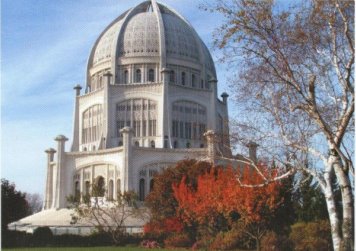
"Adding to the village's international charm is the filigree-domed Baha'i House of Worship, one of only seven Baha'i temples world- wide. Encircled by blossoms and fountains, it attracts international visitors year round. "

Wednesday, June 11, 2008

The Covenant of Baha’u’llah

Abdu’l-Baha mentioned about the power of the Covenant of Baha’u’llah that

“Know this for a certainty that today, the penetrative power in the arteries of the world of humanity is the power of the Covenant. The body of the world will not be moved through any power except through the power of the Covenant. There is no other power like unto this. This Spirit of the Covenant is the real Center of love and is reflecting its rays to all parts of the globe, which are resuscitating and regenerating man and illuminating the path to the Divine Kingdom."

Tuesday, June 3, 2008

Baha’i Election

Though the season of primaries is almost behind us, November is nearly half a year away and we could still be in for a lot more partisan politics and mudslinging. If it seems like there ought to be a more civil way to run democratic elections, members of the Baha’i faith say that’s because there is. And once a year, they refine a new democratic process in that big white temple in north suburban Wilmette. The 100th Baha’i National Convention was recently held there. Eight Forty-Eight contributor Jennifer Brandel watched the process.
Listen to the full story here:
http://chicagopublicradio.org/Content.aspx?audioID=24887

النظام الاداري البهائي
أنزل حضرة بهاء الله النظام الإداري الخاص به ، أي أنه أخبرنا عن المؤسسات البهائية التي يجب أن تعمل وتدير شئون العالم الإنساني
فلا وجود لرجال دين فى الدين البهائي بل مؤسسات بهائية هى نواة لما سيصبح فى المستقبل النظام العالمي
المؤسسات البهائية هي
بيت العدل الأعظم: وهو المؤسسة العليا فى الدين البهائي والذي يتوجه له جميع البهائيون في العالم. ويتم انتخابه كل خمس سنوات من قبل اعضاء المحافل المركزية فى العالم كله ، حيث يحق لهم انتخاب تسعة افراد بهائيين بالغين (من سن 21 سنة) من اى منطقة فى العالم.
المحفل الروحاني المركزي: ينتخب البهائيون في كل دولة أعضاؤه التسعة مرة في كل سنة، وهو المسئول عن الجامعة البهائية فى الدولة
المحفل الروحاني المحلي: هو الذي يقود شؤون الجامعة البهائية بالمدينة ويتم انتخاب أعضاؤه التسعة من قبل أعضاء الجامعة المحلية

جميع المؤسسات البهائية يتم انتخاب اعضاءها عن طريق الاقتراع السري فلا يسمح بالترشيحات او الدعاية. كما لايتلقى اعضاء المؤسسة اى اجر على مايقومون به من خدمات فهم يفعلون ذلك لوجه الله تعالى. من ناحية اخرى الانتخاب هو واجب مقدس على كل فرد بهائي ،لذلك يقوم كل فرد بالبحث والتحري بنفسه عن الاصلح لهذا النوع من الخدمة، كما يطلب التأييد والتوفيق من الله سبحانه وتعالى.

Thursday, May 29, 2008

The Ascension of Baha'u'llah

Holy day marks 116th anniversary of the passing of Baha’u’llah


Around the globe, tens of thousands more turned their faces in the direction of the same shrine – for Baha’is, the holiest spot on earth – in remembrance of the night in 28 May, 1892 that Baha’u’llah passed away at His home near Acre in the Holy Land.
His remains were entombed on the same property, now a site of pilgrimage for members of the Baha’i Faith the world over.


Baha’u’llah was born in Tehran, Iran, but He and a large group of His followers were banished from their native land in 1853 and forced to go first to Baghdad, then on to what was the Ottoman Empire and the remote prison city of Acre.


Baha’is believe that Baha’u’llah is the Messenger of God for this age, the most recent in a line of divine educators that includes Buddha, Jesus, Krishna, Mohammed, Moses, and Zoroaster, among others.


The anniversary of the Ascension of Baha’u’llah is one of nine holy days on which Baha’is suspend work.


Prayer


The praise which hath dawned from Thy most august Self, and the glory which hath shone forth from Thy most effulgent Beauty, rest upon Thee, O Thou Who art the Manifestation of Grandeur, and the King of Eternity, and the Lord of all who are in heaven and on earth! I testify that through Thee the sovereignty of God and His dominion, and the majesty of God and His grandeur, were revealed, and the Daystars of ancient splendor have shed their radiance in the heaven of Thine irrevocable decree, and the Beauty of the Unseen hath shone forth above the horizon of creation. I testify, moreover, that with but a movement of Thy Pen Thine injunction “Be Thou” hath been enforced, and God’s hidden Secret hath been divulged, and all created things 231 have been called into being, and all the Revelations have been sent down.
Bahá’u’lláh

Monday, May 5, 2008

House of Worship restoration necessitates partial closing


To enable further restoration of the Baha'i House of Worship and begin construction of the new Visitors Center, the lower level of the House of Worship, which currently houses the Visitors Center and bookstore, will be closed to the public for approximately one year, from May 19, 2008, to May 2009.

The auditorium (prayer hall), on the upper level of the House of Worship, will remain open for prayers and meditation. The elevator to the auditorium will not be available so access to the auditorium will be by stairs only during this period. The gardens are wheelchair accessible.

Guides will continue to offer tours of the temple, and restrooms will be available. During the partial closing, visitors will enter the temple from the corner of Linden Avenue and Sheridan Road, walking along the reflecting pool before ascending the stairs to the auditorium.

There will be a limited number of spaces in the House of Worship parking lot to the west of the building. Parking on nearby streets also will be available.