Showing posts with label Baha'u'llah. Show all posts

Tuesday, February 19, 2013

Ayyám Al Há - أيام الهاء

The Baha'i calendar consists of 19 months and the Baha’i month consists of 19 days, giving 361 days, requiring the addition of four or five more days. Ayyám Al Há form the intercalary days that fill out the 365 or 366 days of the solar year.

Baha'u'llah specified in the Kitáb Al Aqdas that the Days of Ha should be inserted in the calendar just before the month of fasting:
"Let the days in excess of the months be placed before the month of fasting. We have ordained that these, amid all nights and days, shall be the manifestations of the letter Há, and thus they have not been bounded by the limits of the year and its months...and when they end--these days of giving that precede the season of restraint--let them enter upon the Fast. Thus hath it been ordained by Him Who is the Lord of all mankind."

This holiday begins each year on the evening of February 25 and ends at sunset on March 1st. Of this period Bahá'u'lláh writes:
"It behoveth the people of Bahá, throughout these days, to provide good cheer for themselves, their kindred and, beyond them, the poor and needy, and with joy and exultation to hail and glorify their Lord, to sing His praise and magnify His Name."

As in His prayer for Ayyám Al Há, Bahá'u'lláh juxtaposes these "days of giving" with the Fast's "season of restraint." Ayyám Al Há is intended partly as spiritual preparation for the Fast, a reminder of its approach, and a way of fostering the detachment from material things so necessary for the Fast.

“Ayyam Al Ha" is an Arabic phrase means literally the "Days of Ha" ("Ha" is an Arabic letter corresponding to the English "H") the numerical value of "Há" is 5, the sum of the numerical values of the letters in the "Báb," and the maximum number of intercalary days."Há" is also the first letter of an Arabic pronoun commonly used in Arabic religious writings to refer to God, or "the Divine Essence." "Há" by itself is used as a symbol of "the Essence of God," and was the subject of many Arabic essay on its mysteries.

Bahá'u'lláh has designated the intercalary days "amid all the nights and days" as manifestations of the letter Há"--that is, as Days of the Divine Essence. Thus Ayyám Al Há can be thought of as days that symbolize eternity, infinity, and the mystery and unknowable Essence of God Himself. Contemplation during these days of the timeless mystery of the Essence of God provides us the "joy and exultation" with which to "sing His praise and magnify His Name."

 
أيام الهاء

يتبع التقويم البهائي السنة الشمسية التي تتألف من 365 يوما وخمس ساعات وخمسين دقيقة. وتتألف السنة البهائية من تسعة عشر شهرا، كل شهر منها تسعة عشر يوما سُميت على أسماء صفات الله (فيكون المجموع 361 يومًا) يضاف إلى ذلك الأيام الزائدة وهي أربعة أيام، أو خمسة أيام في السنوات الكبيسة. هذه الايام الزائدة سميت بأيام الهاء وقد حدد حضرة بهاء الله موقعها في السنة البهائية بان تكون قبل شهر الصوم العلا
:15يتفضل حضرة بهاء الله في الكتاب الاقدس، فقرة
واجعلوا الايام الزّائدة عن الشّهور قبل شهر الصّيام، انّا جعلناها مظاهر الهاء بين اللّيالي والايام لذا ما تحددّت بحدود السّنة والشّهور، ينبغي لاهل البهاء ان يطعموا فيها انفسهم وذوي القربى ثم الفقراء والمساكين، ويهللنّ ويكبّرنّ ويسبّحنّ ويمجّدنّ ربّهم بالفرح والانبساط. واذا تمّت ايام الاعطاء قبل الامساك، فليدخلنّ في الصّيام كذلك حكم مولى الانام

تبدأ أيام الهاء كل عام مساء يوم الخامس والعشرين من شهر فبراير وتنتهي عند غروب شمس اليوم الأول من شهر مارس. وقد أوصى حضرة بهاء الله بإقامة الولائم، والضيافة، والإنفاق على الفقراء والمساكين، احتفالا بها

وتعقد فيها اجتماعات بكلّ محبّة وسرور وابتهاج وتتزيّن فيها مجالس عامّة ويكون الجميع فيها زمرة واحدة، فتتجسّد في الأبصار وحدة الأمّة وألفتها واتّحادها
حضرة عبد البهاء

المدلولات الروحانية لايام الهاء
هذه الأيام الزائدة على الشهور قد امتازت بانتسابها إلى "الهاء" وهو حرف يساوي في الحساب الأبجدي العدد خمسة، وهو أكبر عدد يمكن أن تصل إليه عدة أيام الهاء. وكذلك يشير حرف الهاء إلى مدلولات ومعان روحانية، ومن جملة ما يرمز إليه "الهوية الإلهية"، أي" ذات الغيب المنيع"، أي" الله" سبحانه وتعالى.وهي تعتبر اعداداً روحانياً لفترة الصوم

هذه ايام الهاء وأمرنا الكل أن ينفقوا فيها على انفسهم وعلى الذين توجهوا إلى هذا المقام المرفوع أن اذكروا الله فيها ثم اعرفوا قدرها لأنها تحكي عن هذا الاسم الذي به سخر الله الغيب والشهود
حضرة بهاء الله

قد تشرفت الأيام يا إلهي بالأيام التي سميتها بالهاء كأن كل يوم منها جعلته مبشراً ورسولاً ليبشر الناس بالأيام التي فيها فرضت الصيام على خلقك وبريتك ليستعد كل نفس للقائها ويعين في قلبه محلاً لها ويطهره باسمك لنزولها عليه
حضرة بهاء الله

Friday, December 3, 2010

Baha’u’llah’s Writing

60% of Baha’u’llah’s writing is in Arabic and 40% of his writing is in Persian.


“Although there can be no question or doubt as to the sweetness of the Persian tongue, yet it hath not the scope of the Arabic. There are many things which have not been expressed in Persian, that is to say, words referring to such things have not been devised, whilst in Arabic there are several words describing the same thing. Indeed there existeth no language in the world as vast and comprehensive as Arabic”


From a Tablet to Abu’l-Fadl -The Tabernacle of Unity – Baha’u’llah

Thursday, November 12, 2009

Celebrating the birth of Baha’u’llah


"I was but a man like others, asleep upon My couch, when lo, the breezes of the All-Glorious were wafted over Me, and taught Me the knowledge of all that hath been. This thing is not from Me, but from One Who is Almighty and All-Knowing. And He bade Me lift up My voice between earth and heaven, and for this there befell Me what hath caused the tears of every man of understanding to flow."
Baha'u'llah

Bahá'u'lláh, a title in Arabic that means "The Glory of God", was born on November 12, 1817 in Iran. The son of a wealthy government minister, Mirza Buzurg-i-Nuri, His given name was Husayn Ali and His family could trace its ancestry back to the great dynasties of Iran's imperial past. Bahá'u'lláh led a princely life as a young man, receiving an education that focused largely on horsemanship, swordsmanship, calligraphy and classic poetry.

In October 1835, Bahá'u'lláh married `Asiyih Khanum, the daughter of another nobleman. They had three children: a son, `Abdu'l-Bahá, born in 1844; a daughter, Bahiyyih, born in 1846; and a son, Mihdi, born in 1848. Bahá'u'lláh declined the ministerial career open to Him in government, and chose instead to devote His energies to a range of philanthropies which had, by the early 1840s, earned Him widespread renown as "Father of the Poor."


Because of His teachings, He was banished into an exile, eventually lasting forty years, that took Him to the Holy Land. The first was to Baghdad where, in 1863, He announced Himself as the One promised by His Forerunner, the Báb. From Baghdad, Bahá'u'lláh was sent to Constantinople, to Adrianople, and finally to Acre, in the Holy Land, where He arrived as a prisoner.

Beginning in September 1867, Bahá'u'lláh wrote a series of letters to the world leaders of His time, addressing, among others, Emperor Napoleon III, Queen Victoria, Kaiser Wilhelm I, Tsar Alexander II of Russia, Emperor Franz Joseph, Pope Pius IX, Sultan Abdul-Aziz, and the Persian ruler, Nasiri'd-Din Shah.

In these letters, Bahá'u'lláh openly proclaimed His station. He spoke of the dawn of a new age. But first, He warned, there would be catastrophic upheavals in the world's political and social order. To smooth humanity's transition, He urged the world's leaders to pursue justice. He called for general efforts at disarmament and urged the world's rulers to band together into some form of commonwealth of nations. Only by acting collectively against war, He said, could a lasting peace be established.

Continued agitation from opponents caused the Turkish Government to send the exiles to Acre, a penal city in Ottoman Palestine. Acre was the end of the world, the final destination for the worst of murderers, highway robbers and political dissidents. A walled city of filthy streets and damp, desolate houses, Acre had no source of fresh water, and the air was popularly described as being so foul that over flying birds would fall dead out of the sky.

It was in Acre that Bahá'u'lláh's most important work was written. Known more commonly among Bahá'ís by its Arabic name, the Kitab-Al-Aqdas(the Most Holy Book), it outlines the essential laws and principles that are to be observed by His followers, and lays the groundwork for Bahá'í administration.
In the late 1870s, Bahá'u'lláh was given the freedom to move outside the city's walls, and His followers were able to meet with Him in relative peace and freedom. He took up residence in an abandoned mansion and was able to further devote Himself to writing.

On 29 May 1892, Bahá'u'lláh passed away. His remains were laid to rest in a garden room adjoining the restored mansion, which is known as Bahji. For Bahá'ís, this spot is the most holy place on earth.

His teachings had already begun to spread beyond the confines of the Middle East, and His Shrine is today the focal point of the world community which these teachings have brought into being.

Sunday, April 26, 2009

Northbrook Interfaith Walk

"Consort with the followers of all religions in a spirit of friendliness and fellowship" Baha'u'llah

The Northbrook Baha'i Community invites you to come and learn new ways of eliminating all forms of prejudice, at Northbrook public library in the Civic Room. A Family Friendly event!

Bike the Walk, Walk the Walk, or drive. Visit participating Houses of Worship and experience the rich cultural diversity that exists right in our own backyard. Come together to learn, experience and enjoy!

Northbrook is home to marvelous variety of religious traditions. The Northbrook Clergy Association and the Northbrook Community Relations Commission are co-sponsoring the Northbrook Interfaith Walk that will open the doors to 17 religious institutions for all to enjoy on Sunday April 26, 2009 from 1-4 PM.

The religious diversity of our community is a gift. This opportunity to learn about traditions of those that differ from our own is a unique one. We have the great opportunity to model mutual respect and the shared values of care and justice in a world that too often closes doors before reaching out.

Saturday, December 27, 2008

Prayer for America

" O Thou kind Lord! This gathering is turning to Thee. These hearts are radiant with Thy love. These minds and spirits are exhilarated by the message of Thy gladtidings. O God! Let this American democracy become glorious in spiritual degrees even as it has aspired to material degrees, and render this just government victorious. Confirm this revered nation to upraise the standard of the oneness of humanity, to promulgate the Most Great Peace, to become thereby most glorious and praiseworthy among all the nations of the world. O God! This American nation is worthy of Thy favors and is deserving of Thy mercy. Make it precious and near to Thee through Thy bounty and bestowal. _'Abdu'l-Baha

This prayer was revealed by Abdu'l-Baha on the occasion of his visit to the United States of America in 1912; he was travelling from April through December touring North America.

Abdu'l-Baha is the son of Baha'u'lla the profit founder of the Baha'i religion.

Baha'u'llah is regarded by Baha'is as the most recent in the line of Messengers of God that stretches back beyond recorded time and that includes Abraham, Moses, Buddha, Zoroaster, Christ, and Muhammad.

Monday, October 27, 2008

United Nations Day - يوم الامم المتحدة

The name "United Nations", coined by United States President Franklin D. Roosevelt, was first used in the "Declaration by United Nations" of 1 January 1942, during the Second World War, when representatives of 26 nations pledged their Governments to continue fighting together against the Axis Powers.

In 1945, representatives of 50 countries met in San Francisco at the United Nations Conference on International Organization to draw up the United Nations Charter.

The United Nations officially came into existence on 24 October 1945, when the Charter had been ratified by China, France, the Soviet Union, the United Kingdom, the United States and by a majority of other signatories. United Nations Day is celebrated on 24 October each year.
It has traditionally been marked throughout the world by meetings, discussions and exhibits on the achievements and goals of the Organization. In 1971, the General Assembly recommended that Member States observe it as a public holiday.

The Bahá'í International Community and the United Nations

More than a century ago, Bahá'u'lláh called for the creation of a system of international governance, based on the principle of collective security, which would encompass all of the nations of the world and lay the foundations for a lasting and universal peace. In seeking to promote this concept, as well as to engender justice, peace and prosperity at the international level, the worldwide Bahá'í community has, as a duly accredited non-governmental organization, long worked closely with the United Nations, supporting many of its goals and programs. Bahá'í representatives were present in 1945 in San Francisco at the founding of the United Nations. in 1948, the Bahá'í International Community itself was recognized by the UN DPI as an international non-governmental organization.

In May 1970, the Bahá'í International Community was granted consultative status with the UN Economic and Social Council (ECOSOC), allowing for a greater degree of interaction with the Council and its subsidiary bodies in efforts to promote social and economic development worldwide. In March 1976, the Bahá'í International Community was granted consultative status with the United Nations Children's Fund (UNICEF), similarly extending opportunities for interaction with the United Nations to promote the health, education and well-being of children.

The Bahá'í International Community participates actively in United Nations consultations dealing with minority rights, the status of women, crime prevention, the control of narcotic drugs, the welfare of children and the family, and the movement toward disarmament.
Among the measures which the Bahá'í community advocates as contributions to world unity are a federation of nations, an international auxiliary language, the coordination of the world's economy, a universal system of education, a code of human rights for all peoples, an integrated mechanism for global communication, and a universal system of currency, weights and measures.


*****


وضع تسمية "الأمم المتحدة" رئيس الولايات المتحدة الأسبق فرانكلين د. روزفلت، واستُخدم هذا الاسم للمرة الأولى في "إعلان الأمم المتحدة" الصادر في 1 كانون الثاني/يناير 1942، خلال الحرب العالمية الثانية، عندما أخذ ممثلو 26 أمة من حكوماتهم تعهدا بمواصلة القتال سويا ضد قوات المحور.

وقد اشترك في وضع ميثاق الأمم المتحدة ممثلو 50 بلدا في أثناء مؤتمر الأمم المتحدة المعني بالمنظمة الدولية، ثم برز كيان الأمم المتحدة رسميا إلى حيز الوجود يوم 24 تشرين الأول/أكتوبر 1945، عندما صدق على الميثاق كل من الاتحاد السوفياتي والصين وفرنسا والمملكة المتحدة ، والولايات المتحدة الأمريكية، ومعظم الدول الموقعة عليه. واصبح هذا اليوم هو يوم الامم المتحدة. وبدأ الاحتفال به منذ عام 1948. ويتسم الاحتفال بهذا اليوم عادة في جميع أنحاء العالم بتنظيم اجتماعات ومناقشات وعروض عن أهداف المنظمة وإنجازاتها. وفي عام 1971، أوصت الجمعية العامة أن تحتفل الدول الأعضاء بهذا اليوم باعتباره مناسبة عامة.

الجامعة البهائية العالمية وعلاقتها بالامم المتحدة

للجامعة البهائية تاريخ حافل بالعمل مع المنظمات الدولية. فقد تأسس "المكتب البهائي العالمي" في مقر عصبة الأمم في جنيف عام1926 ، وخدم هذا المكتب كمركز للبهائيين الذين يشاركون في نشاطات عصبة الأمم. وحضر البهائيون توقيع ميثاق الأمم المتحدة في سان فرانسيسكو عام1945. وفي عام 1948 جرى تسجيل الجامعة البهائية العالمية منظمةً عالميةً غير حكومية مع الأمم المتحدة، وفي عام 1970 مُنحت مركزاً استشاريّاً (يُسمّى الآن مركزاً استشاريّاً "خاصّاً") مع المجلس الاقتصادي والاجتماعي للأمم المتحدة (ECOSOC)، ثم مركزاً استشاريّاً مع منظمة الأمم المتحدة للطفولة (اليونسيف) عام 1976، ومع صندوق الأمم المتحدة الإنمائي للمرأة (اليونيفيم) عام 1989. كما أسست علاقات عمل مع منظمة الصحة العالمية (WHO) عام 1989 أيضاً. وعلى مدى سنوات، عملت الجامعة البهائية العالمية عن قرب مع برنامج الأمم المتحدة للبيئة (UNEP)، ومفوضية حقوق الإنسان، ومنظمة الأمم المتحدة للتربية والعلم والثقافة (اليونسكو)، وبرنامج الأمم المتحدة الإنمائي (UNDP).

:تسعى الجامعة البهائية العالمية في تعاونها مع منظمة الامم المتحدة ، لنشر المبادئ التي يمكن للسلام الدائم أن يقوم عليها


- وحدة الجنس البشري: إن الاعتراف بوحدة الجنس البشري هو أسّ أساس السلام والعدالة والنظام في العالم. وينطوي عليه تغييرٌعضويٌّ في تركيبة المجتمع.
- المساواة بين الرجال والنساء: إن تحرير المرأة هو مطلب مهمّ من مُتطلبات السلام، ولن يستقرّ المناخ الخلقيّ والنفسيّ الذي سوف يتسنى للسلام العالمي أن ينمو فيه، إلا عندما تدخل المرأة بكلّ ترحاب سائر ميادين النشاط الإنساني كشريكة كاملة للرجل.
- معيار عالمي لحقوق الإنسان: فحقوق الإنسان جزء لا يتجزّأ من الواجبات، وإذا ما أردنا تحقيق السلام والتقدم الاجتماعي والاقتصادي، فيجب الاعتراف بحقوق الإنسان وحمايتها محليّاً ووطنيّاً وعالميّاً. وعلاوة على ذلك، يجب العمل على تثقيف الأفراد للاعتراف بحقوقهم وحقوق الآخرين واحترامها.
- العدالة الاقتصادية والتعاون: رؤيةٌ لازدهار وتقدم إنساني بكل ما تحمله هذه العبارة من معنى. إن بعث إمكانات الرفاه المادي والروحاني لسكان الأرض قاطبة سوف يساعد على تحريك الإرادة الجماعية للتغلب على الحواجز الموضوعة أمام السلام كالهوّة السحيقة بين الغني والفقير.
- التعليم الشامل: لأنَّ الجهل هو السّبب الرّئيسيّ في انهيار الشّعوب وسقوطها وفي تغذية التّعصّبات وبَقائها. فلا نجاح لأيّة أُمَّةٍ دون أن يكون العلم من حقّ كلّ مُواطِن فيها، رجلاً كان أم امرأة. على التعليم أن يروج التوافق بين العلم والدين.
- لغة عالمية إضافية: مع تقدم العالم ليصبح أكثر استقلالاً، فلا بُدَّ له من اتِّخاذ لغةٍ عالميّةٍ واحدةٍ مُتَّفق عليها وخطّ عموميّ ليُدرَّس في المدارس في جميع أنحاءِ العالم؛ وستكون لغةً إضافيّةً إلى جانب اللّغة أو اللّغات الأصليّة للقُطر. والهدف منه توفير سبلٍ أفضل للاتّصال بين الشّعوب، وتخفيض التّكاليف الإداريّة، وخلق روابط أمتن بين كافّة الشعوب والأمم.

Saturday, September 6, 2008

Advancement of Women

Equality of the sexes is a fundamental principle of the Bahá’í Faith. The teachings of Bahá’u’lláh, its founder, uphold the full spiritual and social equality of women and men. The Bahá’í community supports and encourages the full participation of women in all aspects of community life, including leadership and decision-making.

"All should know, and in this regard attain the splendours of the sun of certitude, and be illumined thereby: Women and men have been and will always be equal in the sight of God. The Dawning-Place of the Light of God sheddeth its radiance upon all with the same effulgence. Verily God created women for men, and men for women. The most beloved of people before God are the most steadfast and those who have surpassed others in their love for God, exalted be His glory.... "
Selection From the Writings of Bahá'u'lláh

The Bahá’í Faith has no clergy, and both men and women are encouraged to share in all aspects of Bahá’í community life. At the local level, the affairs of the Bahá’í community are the responsibility of elected institutions known as Local Spiritual Assemblies. These nine-member councils are elected annually from among all adult Bahá’ís residing in a locality. At the national level, the community is governed by the National Spiritual Assembly of the Bahá’ís of the United States, which has been elected annually since 1909.

"In this Day the Hand of divine grace hath removed all distinctions. The servants of God and His handmaidens are regarded on the same plane. Blessed is the servant who hath attained unto that which God hath decreed, and likewise the leaf moving in accordance with the breezes of His will."
Selection From the Writings of Bahá'u'lláh

Women’s equal participation in society is regarded by the Bahá’í community as one of the most important prerequisites of peace. Denial of women’s equality not only inflicts injustice and suffering on women, but also promotes harmful attitudes and habits in men that are carried from the family to the workplace, to political life and ultimately to international relations. Only as women are welcomed into full partnership in all fields of human endeavor will the moral and psychological climate be created in which international peace can emerge.

"And among the teachings of Bahá'u'lláh is the equality of women and men. The world of humanity has two wings -- one is women and the other men. Not until both wings are equally developed can the bird fly. Should one wing remain weak, flight is impossible. Not until the world of women becomes equal to the world of men in the acquisition of virtues and perfections, can success and prosperity be attained as they ought to be."
Selection From the Writings of `Abdu'l-Bahá

In partnership with other organizations, local Bahá’í communities are active participants in events promoting the status of women including International Women’s Day, human rights education and peace activities.

"It is my hope that the banner of equality may be raised throughout the five continents where as yet it is not fully recognized and established. In this enlightened world of the West woman has advanced an immeasurable degree beyond the women of the Orient. And let it be known once more that until woman and man recognize and realize equality, social and political progress here or anywhere will not be possible. For the world of humanity consists of two parts or members: one is woman; the other is man. Until these two members are equal in strength, the oneness of humanity cannot be established, and the happiness and felicity of mankind will not be a reality. God willing, this is to be so."
Selection From the Writings of `Abdu'l-Bahá

المساواة بين الرجال والنساء في الحقوق والواجبات

إنَّ الدين البهائي يدعو إلى تساوي حقوق المرأة بالرجل. فقد أكدَّ حضرة بهاءالله وحضرة عبدالبهاء بأنَّ المرأة لديها القدرات العقلية المساوية للرجل وفي المستقبل تستطيع المرأة إظهار طاقاتها لكي تحقق انتصارات في المجالات الذهنية والعلمية في جميع أوجه الشئون الإنسانية.
وفي مؤتمر اجتماع حرية المرأة في لندن في يناير ١٩١٣ قال حضرة عبدالبهاء مترجماً

إن الإنسانية كالطائر ذي الجناحين أولهما الذكر والآخر الأنثى، وما لم يكن الجناحان قويين تحركهما قوة واحدة فإن الطير لا يقدر أن يطير نحو السماء. فتبعاً لروح هذا العصر يجب أن تتقدم النساء ليتممن رسالتهن في الحياة، ولهذا يجب أن يتساوين مع الرجال. إن أحد تعاليم حضرة بهاءالله المهمة هو أن تصبح النساء في مستوى واحد مع الرجال، وأن يتمتعن بحقوق وامتيازات وفرص مساوية لحقوق الرجال وفرصهم وامتيازاتهم... والآن يجب على النساء أن يمضين في التقدم وأن يوسعْن معلوماتهن في العلوم والآداب والتاريخ لأجل إكمال الإنسانية. فعن قريب سوف ينلن حقوقهن، ويعلم الرجال أن النساء جادّات في عملهن ويحافظن على كرامتهن ويترقين في الحياة السياسية والمدنية. ويقفن حجر عثرة في سبيل الحرب ويطالبن بحقوق الانتخاب والمساواة في كل الامتيازات التي يتمتع بها الرجال.

مختصر المبادئ البهائية، الطبعة الرابعة، نيسان ١٩٩٧، ص٣٥-٣٦

وبفضل الروح التي بثها حضرة بهاءالله في العالم منذ قرن ونصف ونيّف، فإن البشرية الآن تقف على أعتاب أولى مرحلة نضجها، وأصبحنا نرى المرأة تجد طريقها في كثير من ميادين الخدمة الاجتماعية والإنسانية والصحية وحتى غزت عالم السياسة بكل جدارة وإبداع، فانطلقت منها القوى التي كانت حبيسة أفكار وتقاليد ابتدعها الرجل للحفاظ على مكانته في السيطرة والاستئثار بكل شئ متذرعاً بأن المرأة ضلع قاصر ناقص، ومكانها اللائق بها هو البيت واقتصار دورها على واجباتها البيتية فقط. أما الآن فإننا أصبحنا في قرن امتزجت فيه قدرات الرجال وخبراتهم ونضجهم مع قدرات النساء وفضائلهن وما يمتزن به، وبذلك استطاعت البشرية أن تبدأ تحلقها المتزن في سماء ازدهار العالم الإنساني، وهذا ما سيؤدي إلى الحد من نشوب الحروب المدمرة وإقامة دعائم السلام المنشود. فيتفضل حضرة عبدالبهاء بقوله:
مرَّت البشرية في العصور السالفة بمراحل من النقص والفتور لأنَّها لم تكن كاملة. فالحروب وآثارها قد أصابت العالم بآفاتها. إنَّ تعليم المرأة سوف يكون خطوة جيدة نحو إنهاء الحروب والقضاء عليها ذلك لأنَّ المرأة ستستخدم كامل تأثيرها ضد الحرب… وفي الحقيقة فإنَّ المرأة ستكون عنصراً رئيسياً في تأسيس السلام العالمي والمحكمة الدولية. وبالتأكيد ستعمل المرأة على إنهاء الحروب بين الجنس البشري.

- The Promulgation of Universal Peace ص ۱٠٨من كتاب

:وفي مقام آخر يتفضل

"... وفي التوراة قال تعالى: ’وخلق الله الإنسان على صورته‘ وجاء في الحديث النبوي: ’خلق الله آدم على صورته‘ والمقصود بهذه الصورة الصورة الرحمانية يعني أن الإنسان صورة الرحمن ومظهر صفات الله، والله حي والإنسان حي أيضاً. والله بصير والإنسان بصير. والله سميع والإنسان سميع أيضاً. والله مقتدر والإنسان مقتدر أيضاً. اذن فالإنسان آية الرحمن وهو صورة الله ومثاله وهذا تعميم لا تخصيص بالرجال دون النساء. لأنه ليس عند الله ذكور وإناث وكل من هو أكمل فإنه أقرب الى الله سواء كان رجلا أم امرأة. لكن النساء لم يربين حتى الآن تربية الرجال ولو ربين كذلك لأصبحن مثل الرجال. وعندما ننظر الى التاريخ نرى كم من شهيرات النساء وجدن في عالم الأديان وفي عالم السياسة..." إن عدم اشتراك المرأة في الماضي اشتراكاً متكافئاً مع الرجل في شؤون الحياة، لم يكن أمراً أملته طبيعتها بقدر ما برّره نقص تعليمها وقلة مرانها وأعباء عائلتها وعزوفها عن النزال والقتال. أمَا وقد فتحت اليوم أبواب التعليم أمام المرأة، وأتيح لها مجال الخبرة بمساواة مع الرجل، وتهيأت الوسائل لإعانتها في رعاية أسرتها، وأضحى السلام بين الدول والشعوب ضرورة تقتضيها المحافظة على المصالح الحيوية للجنس البشري، لم يعد هناك لزوم لابقاء امتياز الرجل بعد زوال علته وانقضاء دواعيه. إن تحقيق المساواة بين عضوي المجتمع البشري يتيح الاستفادة التامة من خصائصها المتكاملة، ويسرع بالتقدم الاجتماعي والسياسي، ويضاعف فرص الجنس البشري لبلوغ السعادة والرفاهية."

- "الدين البهائي" الصادر عن الجامعة البهائية العالمية عام ۱٩٩٤م

:كما يوجه حضرة عبدالبهاء نداءه لكل الذين بيدهم مفتاح الفرص أمام النساء بقوله

اسعوا حتى ُتظهروا للعالم الإنساني بأن المرأة أكثر قدرة وإتقاناً في عملها وان قلبها أكثر حناناً وأسرع تأثراً من قلب الرجل وأكثر محبة لخير البشر وأكثر اهتماماً بمعاناة الناس واحتياجاتهم وأشد صلابة في مقاومتها للحروب ومحبة للسلام. اسعوا حتى تصبح فكرة السلام العالمي حقيقة بجهود المرأة لأن الرجل أكثر ميولا للحرب من المرأة وبذلك يظهر تفوق المرأة ويتجلى من خلال خدماتها وفعاليتها في تأسيس السلام العالمي.

The Promulgation of Universal Peace ص ۲٨٤من كتاب

Sunday, August 3, 2008

Baha'i House of Worship in Uganda


This unique and beautiful building, situated on the crest of Kikaya Hill, four miles from the center of Kampala on Gayaza Road, was started in May 1957 and opened to the public on January 15, 1961.

The building is 124 feet high, and its dome is 44 feet in diameter. It has a seating capacity for 800 people. From its circular verandah entry to the House of Worship can be made from any of its nine doors.

The green dome is made of tiny glazed mosaic tiles from Italy, while the lower roof tiles are from Belgium. The other walls are of precast stone quarried in Uganda. From Britain came the reinforcing steel and window frames and fittings. Germany supplied the colored glass. All the timber used for the doors and benches is from Uganda forests. The exquisite carpeting is of Persian make.

The Baha’i House of Worship is the central edifice of what will eventually be a group of buildings dedicated to the social, humanitarian, educational, scientific, as well as the spiritual aspects of Bahá’í community life. People of all faiths are welcome to use this Temple for prayer and meditation at any time.

Regular services are conducted which consists solely of reading singing and chanting of the Word of God from the Holy Scripture of the world’s great religions.

Sunday, June 22, 2008

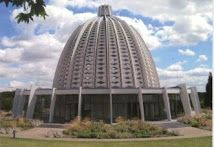
The Baha'i House of Worship in Germany


The House of Worship in Hofheim-Langenhain in Germany is the first of its kind in Europe, was inaugurated on July 4th, 1964. In her dedication address, Ruhiyyih Khanum, widow of Shoghi Effendi, said: This building is dedicated to the three fundamental truths of the Baha’I Religion: the oneness of God, the oneness of His Messengers and the oneness of mankind. Its doors are open to individuals of all religious persuasions, to all races, all ethnic groups, and all social classes. Within its walls will be heard not only prayers and scripture of our own religion, but also those of other great revealed religions of the world. We believe that these Holy Writings represent the treasure houses of the eternal basic truths, which God has revealed at different times for the guidance, and salvation of the entire human race.

The Faith of Baha’u’llah has no clergy. Baha’is believe it is the responsibility of each individual to conduct his or her own personal search for truth based on the immediate, unadulterated and unobscured Word of God. Consequently, in the House of Worship reading and chanting of Holy Scriptures from the world’s revealed religions is free of interpretation or elaboration through additional text or commentary.

Shoghi Effendi gave instructions in 1953 to build the first European House of Worship near Frankfurt am Main. A decisive factor in the choice of the location was this city’s central location with respect to both Germany and Europe as a whole.

A competition to design the House of Worship had already taken place in 1954. Following careful scrutiny of all proposals submitted by the nineteen participating architects, the design by a young Frankfurt based architect named Teuto Rocholl was selected.

The basic requirements for the structure of a House of Worship had been formulated by ‘Abdu’l Baha…….The Mashriqu’l Adhkar, which is to be erected over a central floor plan, …must have nine sides, doors, fountains, paths, gateways, columns and gardens, with the ground floor, galleries and domes, and in design and construction it must be beautiful…

The House of Worship was built using a steel concrete skeletal (exposed concrete) construction. The reconstructed steel concrete ribs were assembled on site and fixed in place with poured steel concrete rings brought into place at the lower and upper extremities of the ribs.

After three and a half years of construction, Europe’s first Baha’I House of Worship was dedicated in July 1964.

In 1987, the House of worship was declared a cultural monument by the State of Hesse (i.e. the State incorporating the City of Frankfurt and its environs).

In November 2006, I visited the Baha’i House of Worship in Germany and I enjoyed the spiritual atmosphere and I read a prayer for unity.

Thursday, December 27, 2007

One Common Faith


The Bahá’í Faith is a world religion whose purpose is to unite all the races and peoples in one universal Cause and one common Faith. Bahá’ís are the followers of Bahá’u’lláh, Who they believe is the Promised One of all Ages. The traditions of almost every peo­ple include the promise of a future when peace and har­mony will be established on earth and humankind will live in prosperity. Bahá’ís believe that the promised hour has come and that Bahá’u’lláh -Whose title means the Glory of God- is the great Personage Whose Teachings will enable humanity to build a new world. In one of His Writings, Bahá’u’lláh says:

“That which the Lord hath ordained as the sovereign remedy and mightiest instrument for the healing of all the world is the union of all its peoples in one universal Cause, one common Faith.” (Gleanings, p. 255)

God is un­knowable in His Essence

Bahá’u’lláh explains that God is un­knowable in His Essence. This means that people should not make images of God in their minds, thinking of Him, for example, as a man. In general, that which has been cre­ated cannot understand its creator. For instance, a table cannot understand the nature of the carpenter who made it. The carpenter’s existence is totally incomprehensible to the objects he makes.

God is the Creator of all things. He has made the heavens and earth, with its mountains and valleys, its de­serts and seas, its rivers, its meadows and trees. God has created the animals and God has created the human be­ing. The reason behind our creation, is love. Bahá’u’lláh says:

“O Son of Man! I loved thy creation, hence I created thee. Wherefore, do thou love Me, that I may name thy name and fill thy soul with the spirit of life.” (The Hidden Words, Arabic No. 4)

The Eternal Covenant

So although God’s existence is far be­yond our understanding, His love touches our lives and our beings ceaselessly. The way this love flows to us is through His Eternal Covenant. According to this Eternal Covenant, God never leaves us alone and without guid­ance. Whenever humanity moves away from Him and for­gets His Teachings, a Manifestation of God appears and makes His Will and Purpose known to us.

The Manifestation of God

The word “manifest” means to reveal, to bring forth something that was not known before. The Manifestations of God are those special Beings Who reveal to humanity the Word and the Will of God; thus when we listen to Them, we are responding to the Call of God.
There is an example from the physical world that helps us to understand the concept of “Manifestation” as taught by Bahá’u’lláh. In this world, the sun is the source of all warmth and light, without which life would not exist on the planet. Yet the sun itself does not descend to earth, and if we tried to approach it, we would be totally consumed.

But suppose we take a well-polished mirror and point it towards the sun. In it we will see the image of the sun, and the more perfectly polished the mirror, the more perfect the image will be. The Mani­festations of God are like perfect Mirrors that reflect the Light of God in all its Splendor. And all these Mirrors re­flect the same Light. While God is beyond our reach, these perfect Beings come to us from time to time, live among us, give us guidance, and fill us with the energy we need to progress, materially and spiritually.

Bahá’u’lláh is The Manifestation of God for this Age

Bahá’ís believe that all the religions teach the same truth. The only difference between them is that each have appeared in a different time in the history of humanity in order to help people to be educated according to the needs of that time. Bahá’u’lláh’s Teachings are in perfect harmony with the Teachings of all previous religions, such as Christianity, and Islam, but they address the condition of humanity today. If we think for a moment about the plight of humanity, we will agree that the time is right for another Manifestation of God to have appeared. This is a passage from the Writings of Bahá’u’lláh that speaks about the Day in which we live:

“This is the Day in which God’s most excellent favors have been poured out upon men, the Day in which His most mighty grace hath been infused into all created things. It is incumbent upon all the peoples of the world to reconcile their differences, and, with perfect unity and peace, abide beneath the shadow of the Tree of His care and loving-kindness.” (Gleanings, p. 6)

Purpose of the Bahá’í Faith: Unity

The aim of the Bahá’í Faith is to unify humanity. Bahá’ís believe that, we are the fruits of one tree and the leaves of one branch. Although we differ from one another physically and emotionally, although we have different talents and capacities, we all spring from the same root; we all belong to the same human family.

Humanity can be likened to a vast garden in which grow side by side flowers of every form, color and perfume. The charm and beauty of the garden lie in this diversity. We should not allow the differences that exist among us—in our physical characteristics, our temperaments, our backgrounds, our thoughts and opinions—to give rise to conflict and strife. We should see the members of the human race as beautiful flowers growing in the garden of humanity and rejoice in belonging to this garden.

“Ye are the fruits of one tree, and the leaves of one branch.”
from the writings of Baha'u'llah

“Bahá’u’lláh has drawn the circle of unity, He has made a design for the uniting of all the peoples, and for the gathering of them all under the shel­ter of the tent of universal unity. This is the work of the Divine Bounty, and we must all strive with heart and soul until we have the reality of unity in our midst, and as we work, so will strength be given unto us.”
Abdul-Baha (Paris Talks, p. 46)

Sunday, November 25, 2007

Baha'u'llah - The Glory of God

Baha'u'llah - The Glory of God
The Prophet-Founder of the Baha'i Faith


"I was but a man like others, asleep upon My couch, when lo, the breezes of the All-Glorious were wafted over Me, and taught Me the knowledge of all that hath been. This thing is not from Me, but from One Who is Almighty and All-Knowing. And He bade Me lift up My voice between earth and heaven, and for this there befell Me what hath caused the tears of every man of understanding to flow."
Baha'u'llah


For Baha'is of Jewish background, He is the appearance of the promised "Lord of Hosts" come down "with ten thousands of saints."


For Baha'is of Buddhist background, He fulfils the prophecies for the coming of "a Buddha named Maitreye, the Buddha of universal fellowship" who will, according to Buddhist traditions, bring peace and enlightement to all humanity.


For Baha'is of Hindu background, He comes as the new incarnation of Krishna, the "Tenth Avatar" and the "Most Great Spirit". He is "the birthless, the deathless" the One who, "when goodness grows weak" returns "in every age" to "establish righteousness" as promised in the Bhagaved'Gita.

For Baha'is of Islamic background, He fulfils the promise of the Qur'an for the "Day of God" and the "Great Announcement" when "God" will come down "overshadowed with clouds."


For Baha'is of christian bachground, He fulfils the paradoxical promises of Christ's return "in the Glory of the Father" and as "a thief in the night."

Tuesday, July 31, 2007

The Baha'i Faith


The Baha'i Faith is the youngest of the world's independent religions. Its founder, Baha'u'llah (1817-1892), is regarded by Baha'is as the most recent in the line of Messengers of God that stretches back beyond recorded time and that includes Abraham, Moses, Buddha, Krishna, Zoroaster, Christ and Muhammad.

The central theme of Baha'u'llah's message is that humanity is one single race and that the day has come for its unification in one global society. God, Baha'u'llah said, has set in motion historical forces that are breaking down traditional barriers of race, class, creed, and nation and that will, in time, give birth to a universal civilization. The principal challenge facing the peoples of the earth is to accept the fact of their oneness and to assist the processes of unification.

One of the purposes of the Baha'i Faith is to help make this possible. A worldwide community of some five million Baha'is, representative of most of the nations, races and cultures on earth, is working to give Baha'u'llah's teachings practical effect. Their experience will be a source of encouragement to all who share their vision of humanity as one global family and the earth as one homeland.

Sunday, July 1, 2007

Sellection from Kitb-Alaqdas

مقتطفات من كتاب الأقدس